Steve Platt collects articles and notes on online dating services, professional matchmaking, speed dating events, and relationship advice for a range of locations and demographics.
"If you want a more personal approach to finding matches than online dating provides, consider enlisting the help of a professional matchmaker."
The site covers speed dating events in Stratford-upon-Avon and Warwickshire, New Jersey singles and professional matchmaking with over 25 years of dating experience, the costs of online dating services including eharmony and Badoo, a guide to legitimate cougar dating sites and avoiding scams, an article on Olympic ice skating pairs and figure skating romances, and a guide for expat dating in Baku, Azerbaijan.
Speed Dating in Stratford-upon-Avon
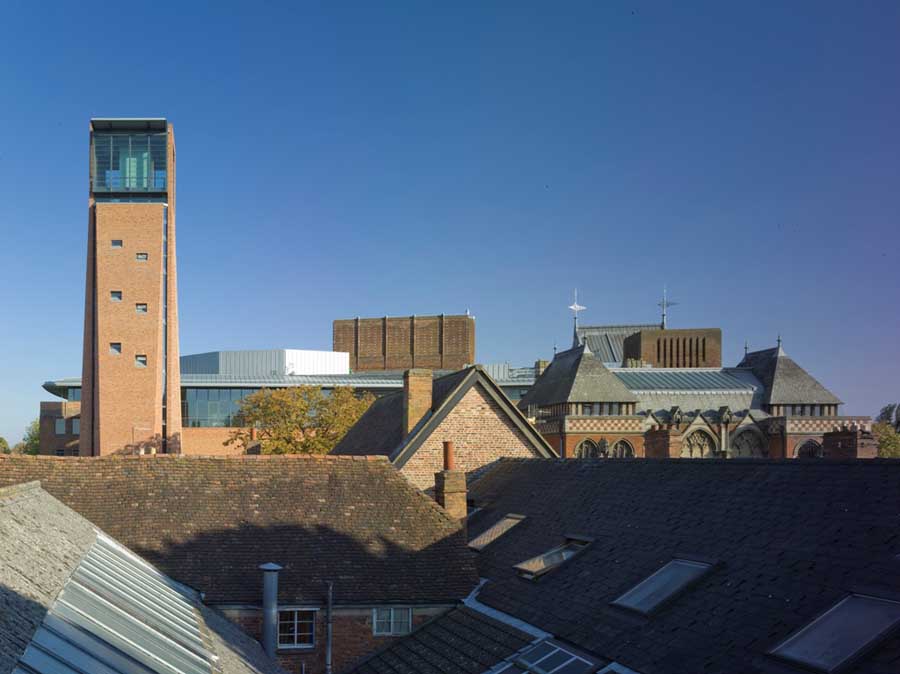
Information on speed dating events in Stratford-upon-Avon and Warwickshire, aimed at single men and women across Herefordshire and the wider region. The page also serves as an introduction agency listing and points to free join options, photos, chat rooms, interest groups, and private webmail.
Locations covered include Stratford-upon-Avon itself as well as nearby towns such as Coventry, with references extending across Warwickshire.
New Jersey Singles & Professional Matchmaking

An overview of professional matchmaking services in New Jersey, highlighting personalized coaching and over 25 years of dating experience. The article describes how a matchmaker works to understand a client's relationship goals, gathers preferences on age range, height range, smoking status, financial security, and personality traits, then brings two people together with continued feedback.
Why Your Projector Image Flickers And How To Fix It
A flickering projector image can appear as a brief black flash, a rhythmic brightness change, horizontal tearing, or a picture that repeatedly loses sync. The fault may come from the projector, HDMI connection, receiver, source device, power supply, or video settings. Identifying the pattern is often more useful than replacing equipment straight away.
In Australian homes, the setup may include a Foxtel or satellite receiver, a streaming box, a games console, an AV receiver and a ceiling-mounted projector. Long HDMI runs through a wall or roof cavity can make signal problems more likely, while bright summer heat in places such as Brisbane, Perth or western Sydney can affect ventilation and operating temperature.
The good news is that most flicker faults can be isolated with a methodical test. Change one thing at a time, check whether the problem affects every source, and pay attention to when it starts. A projector that flickers only during 4K playback needs a different fix from one that flickers on its own menu screen.
Identify The Flicker Pattern
Start by displaying the projector’s built-in menu or a blank test pattern. Disconnect the HDMI source if necessary, then leave the menu visible for several minutes. If the menu flickers as well, the issue is probably inside the projector, its power connection, its lamp or laser system, or its temperature control. If the menu remains stable while the video flickers, investigate the source and signal path first.
Next, test every input separately. Try a streaming service, a Blu-ray player, a game console and a satellite or home theatre receiver if they are available. A flicker affecting just one device usually points to that device’s output settings, cable or software. A fault appearing on all sources is more likely to involve the projector, AV receiver, shared HDMI cable or electrical supply.
Observe the timing and appearance of the fault. A regular brightness pulse may indicate a lamp, laser or dynamic contrast problem. A sudden black screen followed by recovery often means HDMI resynchronisation, commonly called an HDCP or handshake issue. Fine horizontal lines can indicate an incompatible refresh rate, while sparkling pixels and coloured flashes often suggest a poor high-bandwidth connection.
A useful Australian-specific check is the power circuit. Portable heaters, kettles, fridges and air conditioners can create electrical noise or momentary voltage changes when sharing a crowded circuit, although a properly installed home circuit should handle normal loads. Do not open mains-powered equipment; instead, test the projector from a different wall outlet using a sound power lead.
Check Cables, Inputs And Signal Settings
HDMI is the most common cause of intermittent projector flicker. The cable may work perfectly at 1080p but fail when the source changes to 4K, HDR or a higher frame rate. This is especially common with long cables routed from a lounge cabinet to a ceiling projector. A cable labelled “high speed” is not automatically suitable for every modern signal, so match the cable to the resolution and refresh rate you actually use.
Swap the HDMI cable for a short, certified cable and connect the source directly to the projector. Bypass the AV receiver, HDMI switch, soundbar and wall plate for this test. If the image becomes stable, reconnect each component one at a time. This identifies whether the receiver, cable run or intermediate connector is causing the dropouts.
The projector’s input socket can also become loose or damaged. With the picture running, gently move the HDMI plug without applying force. If the image cuts out, replace the cable and inspect the socket. Avoid allowing a heavy cable to hang from a ceiling-mounted projector, as strain on the connector can gradually damage the port.
If your receiver handles audio as well as video, review how the devices are connected. The projector may receive video from the receiver while audio returns through a television or sound system. Understanding HDMI ARC and eARC can help prevent an incorrect connection, although ARC itself does not normally cause a projector image to flicker. It is usually the video handshake, cable bandwidth or output format that needs attention.
Adjust Resolution, Refresh Rate And HDR
Set the source device to a conservative output while testing. Begin with 1080p at 50 or 60 Hz, depending on what the projector supports. Australian television standards commonly use 50 Hz, and some receivers or set-top boxes switch between 50 Hz broadcast content and 60 Hz menus or streaming output. Frequent switching can force the projector to resynchronise, producing a short blackout each time.
If 1080p is stable, increase the settings one step at a time. Test 4K, then HDR, then a higher refresh rate such as 120 Hz if the equipment supports it. A receiver may advertise 4K compatibility but still have limits for HDR format, chroma sampling or refresh rate. Check the manuals for the projector and receiver rather than relying on the label printed on the front panel.
Turn off features that alter the signal during diagnosis. Temporarily disable frame interpolation, dynamic contrast, automatic resolution switching, deep colour, HDR and gaming modes. These features are not necessarily faulty, but each can expose a compatibility problem. Once the image is stable, re-enable them individually to find the setting that triggers the flicker.
Settings That Commonly Stabilise A Flickering Picture
- Select a fixed resolution instead of automatic output switching.
- Test 50 Hz and 60 Hz separately when using Australian broadcast or streaming equipment.
- Turn off HDR temporarily if the projector shows black flashes.
- Use the receiver’s direct or bypass video mode during troubleshooting.
- Disable HDMI-CEC if devices repeatedly power-cycle or renegotiate the connection.
- Install current firmware on the projector, receiver and source device.
A computer connected to the projector needs extra care. Its graphics driver may select a refresh rate the projector accepts only intermittently, particularly over an older HDMI cable. Set the computer to the projector’s native resolution and a standard refresh rate. For a home cinema system, avoid sending a computer signal through several adapters, docks or USB-C hubs until the direct connection has been proven stable.
Inspect Heat, Lamp And Projector Hardware
Heat can cause a projector to dim, shut down briefly or cycle its light source. Check that the intake and exhaust vents are clear, and leave adequate space around the chassis. A ceiling unit boxed into a tight bulkhead may struggle more than a projector sitting in open air. Dust filters, where fitted, should be cleaned according to the manufacturer’s instructions rather than blasted aggressively with compressed air.
In Australia, a projector in a tin-roofed room, enclosed verandah or sunny media space can face high ambient temperatures. A dark cinema room may still become hot near the ceiling in summer, particularly during a long film or sports session. If flickering begins after 30 or 60 minutes and disappears after cooling, heat is a strong suspect. Check the temperature warning indicators and fan behaviour before continuing to use it.
Lamp-based projectors can flicker as the lamp ages. The image may pulse, vary in colour or become unstable after the lamp has been running for a while. A lamp approaching the end of its rated life should be replaced with the correct model, not a cheap incompatible substitute. Never touch a replacement lamp’s glass with bare fingers, and follow the service procedure in the manual.
Laser projectors have no conventional lamp, but their light engine and power electronics can still fail. A laser unit that flickers on its internal menu after it has warmed up may require professional inspection. Repeatedly switching it on and off is unlikely to solve the underlying problem and can shorten component life.
Hardware Checks Worth Making Before Booking Repairs
- Confirm that the projector’s fan starts normally and is not unusually loud.
- Clean accessible filters and vents while the unit is switched off and cool.
- Check the lamp-hours or light-source status in the projector menu.
- Make sure ceiling brackets do not block an intake or exhaust vent.
- Test with the projector placed temporarily in an open, cool position.
- Look for warning lights, temperature messages or automatic shutdown events.
Do not remove the projector’s case unless you are qualified to work on electronic equipment. Internal capacitors can retain dangerous voltage, and optical components are sensitive to dust and incorrect alignment. In Australia, use an authorised service centre or a qualified audiovisual technician, especially when the unit is ceiling-mounted or still covered by warranty.
Trace Receivers, Power And Installation Problems
An AV receiver can introduce flicker when it converts, scales or passes video between incompatible devices. Set its video processing to “through”, “direct” or the equivalent option, then connect the source to the receiver and the receiver to the projector. If the direct source-to-projector test is stable but the receiver path is not, update the receiver firmware and review its HDMI format settings.
Satellite receivers and pay-TV boxes can also change resolution during adverts, menus and live broadcasts. Some models output 576i, 720p, 1080i or 1080p depending on the channel. A projector may briefly lose lock each time the format changes. Locking the receiver to a single compatible output can reduce these interruptions, though it may require the receiver to perform the scaling instead.
Cable management matters in a long installation. Keep HDMI away from mains cables where practical, avoid tight bends and use proper strain relief. HDMI extenders over Ethernet can be reliable, but they must be installed as a matched transmitter-and-receiver pair and may have limitations with 4K HDR. Cheap wall plates, couplers and unpowered splitters add more points of failure.
Australian homes bring a few practical installation considerations. Older houses may have difficult roof cavities, while rental properties often restrict drilling and permanent cable routes. A Bunnings-style cable cover can tidy a temporary run, but it should not create a sharp bend behind the projector. In larger rooms around Adelaide, Melbourne or regional New South Wales, a long cable run may need an active or optical HDMI solution rather than several passive cables joined together.
Use A Safe Troubleshooting Sequence
Work through the system from the projector backwards. First confirm whether its menu flickers. Then test a short HDMI cable, a single source and a basic resolution. After that, add the receiver, longer cable, wall plate and enhanced video settings one at a time. This approach avoids replacing expensive equipment based on guesswork.
Keep notes about the result of each test. Record the source, resolution, refresh rate, cable length and time before the fault appears. If you need support from the retailer or manufacturer, these details are far more useful than saying the picture is “playing up”, although that phrase will certainly be understood at a local electronics shop.
A stable internal menu with flickering external video usually leads to the cable, source, receiver or settings. A flickering internal menu points towards the projector itself. Flicker that follows the projector when it is moved to another room may indicate the unit, while flicker that stays with one cable route suggests the installation.
Stop testing and arrange qualified service if you smell overheating plastic, hear repeated electrical arcing, see smoke, notice a swollen power component or find that the projector shuts down with a warning. For a normal HDMI fault, patient isolation, a suitable cable and compatible output settings usually restore a steady cinema image without replacing the whole home theatre system.
Legitimate Cougar Dating Sites

A guide to finding legitimate cougar dating sites, avoiding scams, and getting good results on platforms such as CougarDate.com, Cougar Life, and Adult FriendFinder. The article lists seven cougar dating sites, examines whether CougarDate.com is a scam, and includes a separate list of free dating and hookup sites.
Olympic Ice Skating Pairs and Romances

An article discussing prominent figure skating romances, marriages, and couples among Olympic ice skating pairs. It profiles eight Olympic ice skating pairs who are couples in real life and explains the required elements of pair skating, including lifts, twist lifts, throw jumps, jumps, and spins.
Expat Dating in Baku

A guide for expatriates looking to date in Baku, Azerbaijan. Topics include social life for expats, safety and comfort in areas like Downtown Baku, the visa process, getting around by mass transit, and monthly events for expatriates. The piece also references Baku hotels and places to stay.
Reformed Matchmaking and Jewish Dating

Content related to Reformed matchmaking, JRetroMatch, and Jewish matchmaking services within the context of religious observance. The article discusses Reform Judaism, the spectrum of positions on halakhic observance, and looks at how matchmaking functions within observant communities.
Age Gap Dating Advice

A discussion on age preferences in dating, referencing research guidelines and personal experiences with age-gap relationships. The piece references Psychology Today and examines whether one well-known age guideline may not work for everyone, along with personal anecdotes from readers.