Steve Platt collects articles and notes on online dating services, professional matchmaking, speed dating events, and relationship advice for a range of locations and demographics.
"If you want a more personal approach to finding matches than online dating provides, consider enlisting the help of a professional matchmaker."
The site covers speed dating events in Stratford-upon-Avon and Warwickshire, New Jersey singles and professional matchmaking with over 25 years of dating experience, the costs of online dating services including eharmony and Badoo, a guide to legitimate cougar dating sites and avoiding scams, an article on Olympic ice skating pairs and figure skating romances, and a guide for expat dating in Baku, Azerbaijan.
Speed Dating in Stratford-upon-Avon
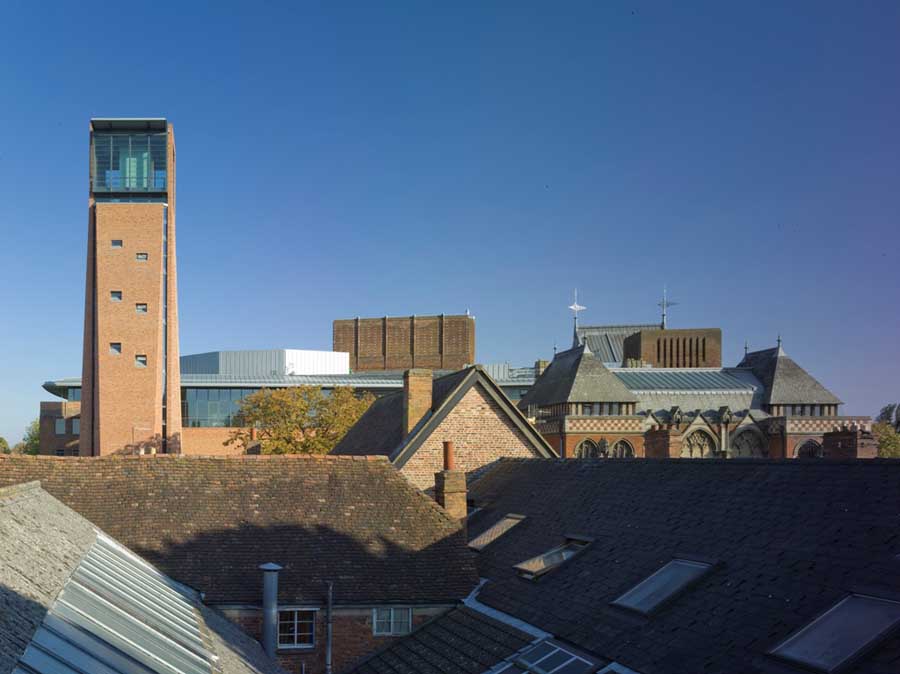
Information on speed dating events in Stratford-upon-Avon and Warwickshire, aimed at single men and women across Herefordshire and the wider region. The page also serves as an introduction agency listing and points to free join options, photos, chat rooms, interest groups, and private webmail.
Locations covered include Stratford-upon-Avon itself as well as nearby towns such as Coventry, with references extending across Warwickshire.
New Jersey Singles & Professional Matchmaking

An overview of professional matchmaking services in New Jersey, highlighting personalized coaching and over 25 years of dating experience. The article describes how a matchmaker works to understand a client's relationship goals, gathers preferences on age range, height range, smoking status, financial security, and personality traits, then brings two people together with continued feedback.
Calibrating your home theater speakers with a sound level meter
Open-plan living defines a lot of Australian homes, from new builds in the western suburbs of Sydney to renovated Queenslanders in Brisbane and weatherboard homes in Hobart. The trade-off is a wide, light-filled room with hard floors, big windows and a kitchen that bleeds into the lounge. The same features that make those spaces pleasant during the day also create acoustic headaches at night, with sound bouncing off tiles, glass and plasterboard. A sound level meter lets you tame that mess and turn a flat, boomy system into one that holds dialogue and surround effects properly. Learn more about Windowsで複数モニターのリフレッシュレートを個別に設定して表示のちらつきを防ぐ方法.
A sound level meter, often called an SPL meter, measures the actual loudness each speaker is producing at the listening seat. The reading is then compared to a known reference, usually 75 dB or 85 dB depending on the format, so that every channel arrives at roughly the same volume. The approach is not glamorous, but it is the same procedure that professional installers run, and it costs very little to do at home with a basic meter, a calibration microphone or even a phone app.
Choosing a sound level meter that fits your setup
The first decision is whether to use a dedicated handheld meter, a USB calibration microphone that plugs into a computer, or a phone app. Each has its place. A handheld meter such as those sold at JB Hi-Fi, The Good Guys and specialist Australian retailers like West Coast Hi-Fi in Perth is the simplest path. A USB microphone is more accurate and required if you want to run REW or other room analysis software. Phone apps are cheap and convenient but their built-in microphones drift with temperature and case position, so they are best treated as a starting point rather than the final reference.
If you are buying a meter for serious work, check that it meets IEC 61672, the international standard for sound level meters. Class 1 devices are accurate to within roughly 0.7 dB and are what acoustic consultants use. Class 2 devices, accurate to around 1.5 dB, are perfectly adequate for a home theatre in Adelaide or a unit in Canberra. Many Australian retailers will list both types, with Class 2 sitting around A$120 to A$220 and Class 1 pushing past A$600. A calibration microphone such as the UMIK-1 is often easier to find locally and pairs well with the room correction bundled into modern AV receivers from Denon, Marantz, Yamaha and Onkyo.
Preparing the room before you measure
A clean reading starts with a quiet room, which is harder than it sounds in Australia. Close the windows, kill the air-conditioner, and if you live in a Melbourne apartment with trams running past, pick an evening when the route 96 has stopped. Background noise pushes your baseline up, and the meter will read through the rumble of a bus, a fridge compressor or a pool pump. Take a baseline reading first, because any subsequent calibration is only as good as the silence around it.
If you live in a newer apartment block, the walls and floor will already meet the acoustic targets set out in the National Construction Code and AS/NZS 2107, which makes neighbour noise a smaller concern than reflections inside your own room. In an older terrace in Sydney or a workers' cottage in Adelaide, the floorboards, sash windows and lath-and-plaster walls behave very differently. Knowing roughly how much treatment the building already provides keeps you focused on the surfaces that actually matter.
Speaker placement matters just as much as meter placement. In a typical open-plan home in Brisbane or Perth, the main left and right speakers end up against a half-wall near the kitchen bench, which boosts some frequencies and cancels others. Pulling them 30 to 60 cm out from the wall flattens the bass. If the room is part of a larger smart-home setup, take a moment to build a smarter home theater network so that the receiver, projector and lighting all settle into the same control scheme before you start measuring. Trying to juggle network drops, IP addresses and speaker stands at the same time is a fast route to mistakes, and a small slip in one corner can throw out every reading that follows.
Measuring levels from the sweet spot
The listening position is the reference point. Set the meter at seated ear height, roughly 1.1 to 1.2 m off the floor, pointed straight up at the ceiling and held in a small tripod or clamped on a mic stand. Tripping over it mid-test is a rite of passage, so a stand is worth the modest outlay. Place the seat in the spot you actually use, not the geometric centre of the room, because in most Australian lounges the couch is pushed against a wall to leave room for the kids.
Run the receiver's pink noise generator through each speaker, one at a time, and write down the reading. Most AV receivers use a 75 dB reference for the main channels and 85 dB for subwoofer-friendly formats, though some studios master to THX levels of 85 dB with 20 dB of headroom. Toggle the meter between A-weighting and C-weighting depending on the recommendation in your receiver's manual. A-weighting mimics the human ear and is the usual choice for general listening. C-weighting captures more low-frequency energy and is handy when you need to verify the sub. As you work through the list of channels, remember that decision fatigue is real, and by the time you get to the rear surrounds your attention will already be wandering. Take a break, grab a coffee, and come back with fresh eyes.
Adjusting receiver settings and crossovers
Once the level of each speaker is roughly even, the next step is to set distances and crossovers. Most receivers let you enter the distance from each speaker to the seat in metres, which trims the delay so that sound arrives in phase. Use a tape measure rather than guessing, even if the couch has migrated a few centimetres to the left. For crossovers, start with 80 Hz for the main left, right and surrounds, and let the subwoofer carry everything below that point. Smaller satellites may need a higher crossover, and Atmos ceiling modules usually want 100 to 120 Hz, depending on their placement relative to the seating area.
Channel trims then need to be set on the receiver so that the meter reads the chosen reference. Bump each trim up or down in 0.5 dB steps until the level matches. A common mistake is to leave the sub 3 dB hot because the bass feels exciting in the showroom, but at home that low-end weight muddies dialogue. If the system is shared with other sources, take a moment to connect a turntable through the dedicated phono input, then re-check the levels afterwards. Adding a new source sometimes nudges the master volume default, and a quick round of meter checks keeps everything balanced.
Troubleshooting and final tweaks
After the first pass, sit through a familiar film with a lot of quiet dialogue, such as a Mad Max chase or an early Sam Neill moment, and listen for the things the meter cannot measure. A reading of 75 dB does not mean the dialogue will be clear if the centre channel is sitting inside a cupboard. If the meter numbers all line up but voices still feel buried, raise the centre by 1 to 2 dB and re-measure. The meter confirms what your ears will catch later.
For those running calibration software on a Windows PC, the same screen used to view the room response can suffer from flicker if the refresh rate is set wrong on each monitor. A quick stop at a display flicker fix on each connected display makes the graphs easier to read. A separate quirk in many newer homes is the rear of the room opening onto a tiled alfresco, which dumps reflections straight back into the listening position. A rug, a bookshelf or a heavy curtain does more for sound quality than another 0.5 dB on a trim. In a strata apartment, the body corporate will also have by-laws on speaker placement and subwoofer isolation pads, so check the rules before drilling into a common wall.
| Tool | Typical price (AUD) | Accuracy | Best for |
|---|---|---|---|
| Phone SPL app | Free – A$15 | ±3 dB, drifts with heat | First-look checks, casual use |
| Handheld Class 2 meter | A$120 – A$220 | ±1.5 dB, IEC 61672 | Most home theaters |
| USB calibration mic (UMIK-1) | A$140 – A$180 | ±1 dB with calibration file | REW, room analysis software |
| Class 1 meter | A$600+ | ±0.7 dB, IEC 61672 Class 1 | Pro installers, studios |
Once everything is dialled in, re-run the room correction software if your receiver supports it, then re-measure each channel to confirm. A well-calibrated system is the difference between a lounge room that doubles as a cinema and one that simply plays loud. It is also the easiest upgrade any Australian home theatre can make, because the cost is largely in the half-hour spent on a quiet evening with a tripod, a meter and a notepad.
Legitimate Cougar Dating Sites

A guide to finding legitimate cougar dating sites, avoiding scams, and getting good results on platforms such as CougarDate.com, Cougar Life, and Adult FriendFinder. The article lists seven cougar dating sites, examines whether CougarDate.com is a scam, and includes a separate list of free dating and hookup sites.
Olympic Ice Skating Pairs and Romances

An article discussing prominent figure skating romances, marriages, and couples among Olympic ice skating pairs. It profiles eight Olympic ice skating pairs who are couples in real life and explains the required elements of pair skating, including lifts, twist lifts, throw jumps, jumps, and spins.
Expat Dating in Baku

A guide for expatriates looking to date in Baku, Azerbaijan. Topics include social life for expats, safety and comfort in areas like Downtown Baku, the visa process, getting around by mass transit, and monthly events for expatriates. The piece also references Baku hotels and places to stay.
Reformed Matchmaking and Jewish Dating

Content related to Reformed matchmaking, JRetroMatch, and Jewish matchmaking services within the context of religious observance. The article discusses Reform Judaism, the spectrum of positions on halakhic observance, and looks at how matchmaking functions within observant communities.
Age Gap Dating Advice

A discussion on age preferences in dating, referencing research guidelines and personal experiences with age-gap relationships. The piece references Psychology Today and examines whether one well-known age guideline may not work for everyone, along with personal anecdotes from readers.