Steve Platt collects articles and notes on online dating services, professional matchmaking, speed dating events, and relationship advice for a range of locations and demographics.
"If you want a more personal approach to finding matches than online dating provides, consider enlisting the help of a professional matchmaker."
The site covers speed dating events in Stratford-upon-Avon and Warwickshire, New Jersey singles and professional matchmaking with over 25 years of dating experience, the costs of online dating services including eharmony and Badoo, a guide to legitimate cougar dating sites and avoiding scams, an article on Olympic ice skating pairs and figure skating romances, and a guide for expat dating in Baku, Azerbaijan.
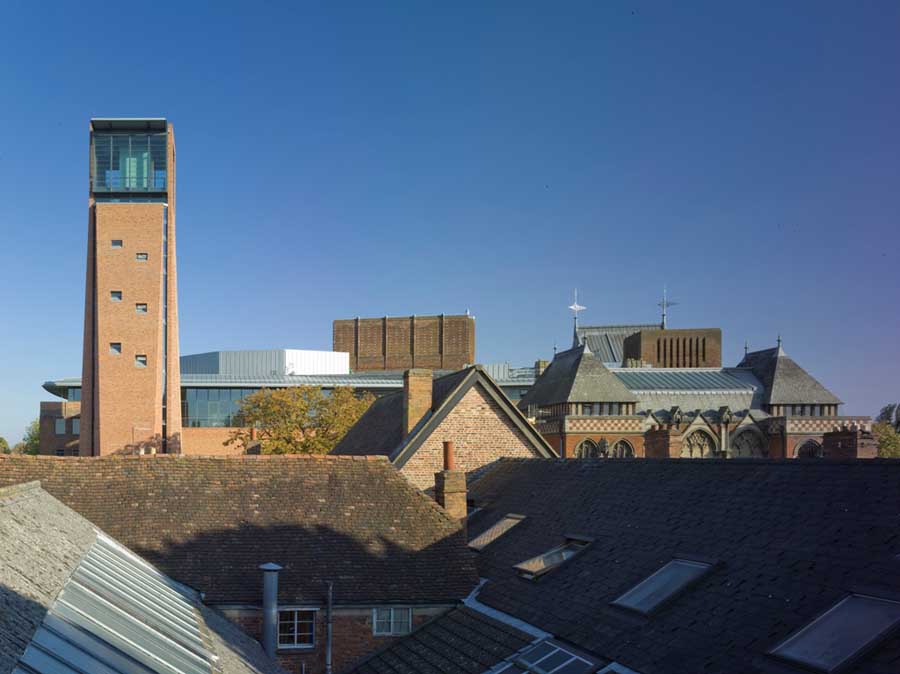
Speed Dating in Stratford-upon-Avon

Information on speed dating events in Stratford-upon-Avon and Warwickshire, aimed at single men and women across Herefordshire and the wider region. The page also serves as an introduction agency listing and points to free join options, photos, chat rooms, interest groups, and private webmail.
Locations covered include Stratford-upon-Avon itself as well as nearby towns such as Coventry, with references extending across Warwickshire.
New Jersey Singles & Professional Matchmaking

An overview of professional matchmaking services in New Jersey, highlighting personalized coaching and over 25 years of dating experience. The article describes how a matchmaker works to understand a client's relationship goals, gathers preferences on age range, height range, smoking status, financial security, and personality traits, then brings two people together with continued feedback.
How to Use a Projector for Gaming with Low Input Lag
Projected games can fill a lounge room or a compact media space, yet a beautiful image is of little value when the character moves after your thumb. A projector for video games with low input lag keeps the action in step with the controller, while the right surround mix gives every direction a clear place on the soundstage.
The delay is created across a chain rather than by the screen alone. The console or PC adds processing, the cable carries the signal, and the projector converts frames into light. Receivers, switches and display modes can add more time, which is why a direct connection often measures better than a convenient home theatre arrangement.
Australian homes also need to account for local equipment and mains power. Foxtel receivers commonly sit alongside game consoles, many Sydney and Melbourne apartments have limited space for cables, and household power runs at 240 volts with Type I plugs. Projectors available through local retailers such as JB Hi-Fi or Kogan can also make replacement leads and warranty claims easier to arrange.
Treat gaming performance as a measurement rather than a promise on a specification sheet. Test the same scene, input and game mode at each resolution, record the results and repeat after changing cables or receiver settings. This guide covers the signal path, projector configuration, home theatre connections, satellite hardware, cable routing and surround calibration.
Measure your baseline latency
Start with the projector and controller you already own. A fast-paced racing game, first-person shooter or rhythm game exposes delay more clearly than a slow menu, while a stopwatch on a phone provides only a rough comparison. Use the same controller, display size and picture mode for every test so that one variable does not distort the result.
Input lag and display response are related but different. Input lag is the delay before a frame appears; response time describes how pixels change once the signal arrives. Slow-motion footage from a recent phone can help compare two settings, although its timestamps are less reliable than a dedicated measurement tool. Reviewers often quote a best-case figure in a specific mode, so note the resolution and refresh rate attached to that number.
Before buying replacement hardware, check the projector's menus and manual. Many models offer a dedicated game mode with less frame interpolation and fewer processing stages. The practical AV guidance from Teknisi can help identify relevant settings, but the final test should happen in your room with your preferred controller.
Choose a direct, capable signal path
For competitive play, connect the console or gaming PC directly to the projector with a certified HDMI cable. This removes the receiver and any video processor from the video path. A PC connected by DisplayPort may benefit from adaptive sync, but a projector with a matching HDMI input is usually easier to operate and may offer equivalent gaming features.
An audio-visual receiver remains useful when it handles switching, bass management and surround speakers. If the console must pass through it, enable HDMI pass-through and the receiver's game-oriented mode. Do not assume every receiver can carry 4K at 120 Hz: the input, internal graphics card, HDMI specification, source and output section must all support that combination. A receiver that accepts 4K/60 can still create lag at 1080p/120 if it downconverts the signal.
Automatic Low Latency Mode can hand the display an appropriate setting when it recognises a game source, while variable refresh rate smooths frame delivery rather than guaranteeing a lower delay. Neither feature compensates for an unsuitable scaler or a slow processing chain. When fixed-line or satellite broadband drops in regional Australia, local clips played through offline media players can separate media buffering from projector delay.
Configure the projector for fast responses
Choose the game, gaming or low-latency mode for active play. This commonly disables motion smoothing, dynamic contrast and other image enhancements that add processing frames. Check that overscan is off and the aspect ratio is set to native or 16:9; a zoomed image can introduce delay in some models. Save separate user profiles if the projector allows them, keeping films in a calibrated cinema mode and games in the quickest mode.
Do not sacrifice the correct picture format to gain speed. A projector may advertise low lag at 1080p/60 but become less responsive at 4K/60 because of heavier image processing, while a model that supports 4K/120 may need a particular HDMI port, cable or firmware version. The on-screen information panel should confirm the active resolution and refresh rate.
Matching audio matters as much as matching frames. The receiver may delay dialogue or surround effects while the image changes immediately, producing a lip-sync mismatch. Begin with automatic lip-sync correction, then apply only a small manual adjustment if explosions or footsteps remain out of position. Headphones from a low-latency gaming headset can provide a cleaner reference during testing than a long speaker delay chain.
Connect the receiver and home theatre equipment
For a full surround-sound setup, use the receiver as the audio hub even if the video takes a separate route. The simplest arrangement is console to receiver, receiver to projector over HDMI, and receiver to speakers. If the console has a separate optical or analogue audio output, that can feed the receiver while the projector receives video directly. An extractor can provide another route, provided it passes the required surround format and does not create its own delay.
On analogue speaker terminals, observe the colour coding and match each channel to the receiver's labels. Spring clips are convenient for fixed installations, while banana plugs make repeated changes easier. Use cable rated for the impedance and run length, and secure the connections without leaving bare conductor exposed. For a 5.1 or 7.1 layout, place the front speakers beside the screen, the centre below it and the surrounds where they can be heard clearly.
A Foxtel receiver can occupy another input on the same AV receiver without changing the game console's source. Give each source an intuitive name, such as Console, Satellite and PC. If the receiver offers headphone outputs for gaming, compare them with the television's audio delay. A small difference between the controller response and the sound can make otherwise responsive games feel sluggish.
Install satellite, power and cable infrastructure
Satellite reception should remain a separate branch of the system. An approved installer can align the dish, weatherproof the coaxial connections and ground the mast in accordance with Australian requirements; attempting alignment from the roof or balcony adds risk without improving controller response. Keep the satellite feed and its cable out of the console-to-projector path so that switching sources cannot disturb the gaming signal.
Plan cable routes early, especially in a Sydney terrace or a compact Melbourne apartment where skirting boards, door frames and built-in furniture restrict access. Run HDMI leads through a floor raceway or along the wall, use rated cable clips to prevent strain, and label both ends. Keep passive 4K/120 HDMI runs under about five metres unless a suitable active or fibre cable is specified for the distance.
Power deserves the same attention. Use grounded 240-volt outlets and a surge-protected board with adequate current capacity for the projector, console and receiver, following each product's instructions. Avoid daisy-chained plug adaptors and leave airflow around the projector and receiver. Budgeting in Australian dollars for certified leads and surge protection is sensible, since a low-cost imported cable may not provide the bandwidth claimed on its label.
Calibrate surround sound and speaker phase
Run the receiver's calibration routine from the normal seating position, not from a corner or behind the sofa. The microphone measures relative levels and timing, so furniture and room reflections affect the result. Check that every speaker receives signal, then listen to the same music and game audio through each channel. A speaker phase guide offers a practical method for checking polarity with a test tone.
Correct phase means the drivers move together; it does not mean every speaker must sound equally loud from every seat. With one speaker's polarity reversed, a centred voice or kick drum may weaken or sound hollow. If the centre channel drops out when its polarity is switched, the connection or amplifier channel needs attention. Do not use phase as a substitute for correcting placement or channel-level imbalance.
Set the bass management crossover and subwoofer level according to the room rather than a universal preset. An 80 Hz starting point often suits a typical living room, but the speaker's low-frequency extension and measured room response matter more. After adjustment, check that game effects such as footsteps remain anchored to their on-screen direction and that the receiver's audio delay matches the projector's video delay.
Troubleshoot lag and compare common setups
When delay appears, simplify the chain. Connect the console directly to the projector, select the game mode, choose a supported resolution and refresh rate, and test again. Then restore one component at a time. A sudden increase after adding the receiver points to video processing or an unsupported frame rate; a black screen with stable audio can indicate a handshake, cable bandwidth or HDCP problem. Pages that mix AV troubleshooting with unrelated relationship advice can dilute useful detail, so verify each fix against the receiver and projector manuals.
The following comparison shows why the best connection depends on whether minimum delay or convenient switching matters more. Values vary between models, so measure your own system rather than treating any figure as guaranteed.
| Connection and mode | Expected behaviour | Best suited to |
|---|---|---|
| Console to projector at 1080p/60 | Often the lowest practical video delay; 60 Hz refresh limits the frame cadence | Competitive play on a standard HD projector |
| Console to projector at 1080p/120 or 4K/120 | Can reduce delay when the whole chain supports the mode; 120 Hz provides an 8.3 ms frame cycle | Consoles and PCs with matching output |
| Console through an AV receiver to projector | May stay near-direct with pass-through and processing off, but adds a potential delay stage | Central switching with surround sound |
| Console to projector with receiver-managed audio | Keeps video short while retaining surround sound; a separate audio feed and lip-sync setting are needed | Flexible video and cinema audio |
| Cinema picture mode at 1080p/60 | Usually processes the image more heavily than game mode, so lag can increase | Film viewing and non-competitive games |
Keep a short setup record with the chosen resolution, refresh rate, receiver pass-through setting and measured delay. Update it after a firmware change or a new HDMI lead, because a swap can alter the handshake or force a different colour format. Low input lag comes from a short, correctly configured signal path, and consistent settings allow projected play to respond as promptly as the controller while the room retains the surround-sound impact that made the projector worthwhile.
Legitimate Cougar Dating Sites

A guide to finding legitimate cougar dating sites, avoiding scams, and getting good results on platforms such as CougarDate.com, Cougar Life, and Adult FriendFinder. The article lists seven cougar dating sites, examines whether CougarDate.com is a scam, and includes a separate list of free dating and hookup sites.
Olympic Ice Skating Pairs and Romances

An article discussing prominent figure skating romances, marriages, and couples among Olympic ice skating pairs. It profiles eight Olympic ice skating pairs who are couples in real life and explains the required elements of pair skating, including lifts, twist lifts, throw jumps, jumps, and spins.
Expat Dating in Baku

A guide for expatriates looking to date in Baku, Azerbaijan. Topics include social life for expats, safety and comfort in areas like Downtown Baku, the visa process, getting around by mass transit, and monthly events for expatriates. The piece also references Baku hotels and places to stay.
Reformed Matchmaking and Jewish Dating

Content related to Reformed matchmaking, JRetroMatch, and Jewish matchmaking services within the context of religious observance. The article discusses Reform Judaism, the spectrum of positions on halakhic observance, and looks at how matchmaking functions within observant communities.
Age Gap Dating Advice

A discussion on age preferences in dating, referencing research guidelines and personal experiences with age-gap relationships. The piece references Psychology Today and examines whether one well-known age guideline may not work for everyone, along with personal anecdotes from readers.