Steve Platt collects articles and notes on online dating services, professional matchmaking, speed dating events, and relationship advice for a range of locations and demographics.
"If you want a more personal approach to finding matches than online dating provides, consider enlisting the help of a professional matchmaker."
The site covers speed dating events in Stratford-upon-Avon and Warwickshire, New Jersey singles and professional matchmaking with over 25 years of dating experience, the costs of online dating services including eharmony and Badoo, a guide to legitimate cougar dating sites and avoiding scams, an article on Olympic ice skating pairs and figure skating romances, and a guide for expat dating in Baku, Azerbaijan.
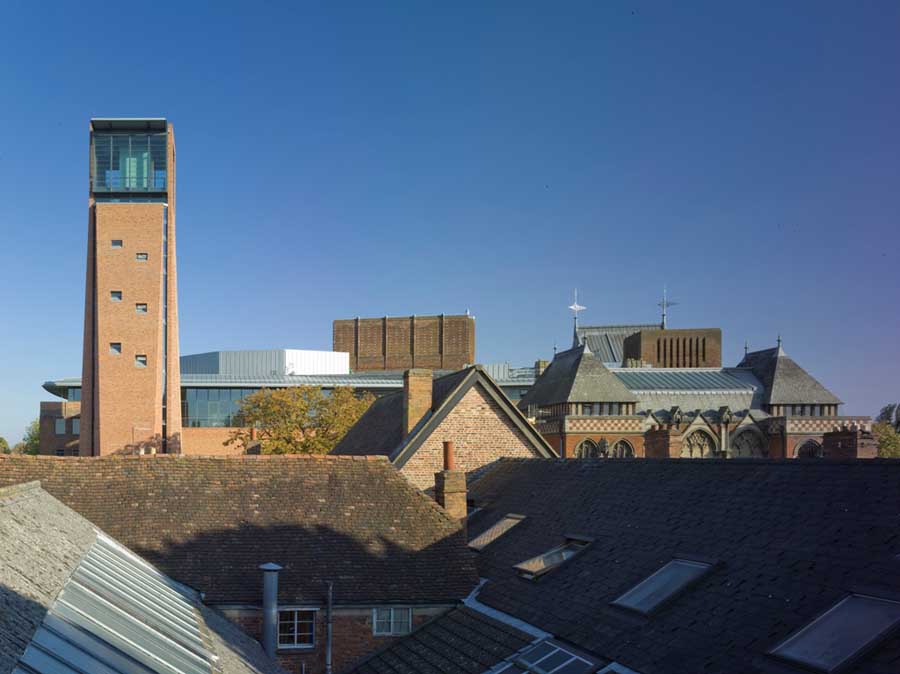
Speed Dating in Stratford-upon-Avon

Information on speed dating events in Stratford-upon-Avon and Warwickshire, aimed at single men and women across Herefordshire and the wider region. The page also serves as an introduction agency listing and points to free join options, photos, chat rooms, interest groups, and private webmail.
Locations covered include Stratford-upon-Avon itself as well as nearby towns such as Coventry, with references extending across Warwickshire.
New Jersey Singles & Professional Matchmaking

An overview of professional matchmaking services in New Jersey, highlighting personalized coaching and over 25 years of dating experience. The article describes how a matchmaker works to understand a client's relationship goals, gathers preferences on age range, height range, smoking status, financial security, and personality traits, then brings two people together with continued feedback.
Taming bass peaks in your home theater room
Low-frequency trouble often announces itself as a boom that seems to follow one person into the next room. A home theater can deliver dialogue clearly and still feel uneven because narrow-band resonances collect energy around common listening positions. The source is rarely the cable or amplifier; it is usually the interaction between speaker output, subwoofer placement and room boundaries. Bass peaks are especially noticeable because they add weight to explosions, drums and film scores while making quieter low passages harder to hear.
A listening chair can sit in a room mode while the centre seat misses much of that energy. Walls, floors and ceilings reflect long wavelengths, creating pressure maxima and cancellation zones that move when anyone shifts position. These boundaries also explain why a single subwoofer may sound excellent from one sofa position and muddy from the aisle. The aim is not to remove every trace of bass, but to make its level and timing reasonably consistent across the seats people actually use.
Treat the process as measurement, placement, correction and verification rather than a hunt for one mysterious switch. Before altering controls, listen to familiar programme material at reference level, note where dialogue becomes boomy and whether the effect changes around the room, and establish a safe listening volume. Then adjust one variable at a time. That sequence prevents a new subwoofer position from disguising an old phase setting or compensating for two filters fighting each other. It also makes the result repeatable for family and guests.
Australian rooms add their own variables. In Sydney and Melbourne, many living spaces combine masonry walls, tiled floors and open-plan furniture layouts; in Brisbane and Perth, a covered alfresco or garage media room may be used on warm evenings, often with little added insulation. Most mains appliances run on about 230–240 volts through Australian circuits with Type I plugs and RCD protection, so amplifiers and subwoofers belong on suitable rated outlets rather than overloaded boards. Keeping documentation also helps consumers exercise rights under the Australian Consumer Law, particularly when a dealer disputes whether a fault existed at purchase.
Find and verify the peaks
Use a calibrated measurement microphone and room-analysis software such as REW to make the problem visible. Set the microphone at the ear position of the main viewing seat, point it toward the ceiling, and keep it away from cushions or cabinetry. Run a sweep from roughly 20 to 200 Hz at a low, safe volume, then save the impulse response. Repeat at front, middle and rear positions to show whether a bump occupies the whole seating area.
A broad lift that persists across several seats points toward room excitation, while a sharp notch often reveals destructive interference between the subwoofer and room boundaries. Furniture can add a narrower resonance, and moving the measurement microphone by only a few centimetres can exaggerate the apparent shape of the curve. Use the raw numbers rather than trusting a single dramatic bump. If you archive calibration sheets on film, cleaning a Coolscan platen without scratching the glass helps keep those records legible for later comparison.
- Peak level and frequency: Record the centre frequency, magnitude and whether the same peak appears at every seat.
- Bandwidth: Separate broad room modes from narrow spikes that may be caused by nearby objects.
- Seat variation: Compare front, centre and rear readings before deciding how much correction is needed.
- Headroom: Leave some amplifier headroom so normal programme material does not approach clipping.
Use those results to choose the correction. A peak several decibels above the neighbouring response usually needs a modest cut, not a large boost elsewhere. Avoid chasing deep nulls with excessive positive equalisation, since added low-frequency energy can increase distortion and make the subwoofer work harder. Changes of about 2–6 dB are often easier to trust than dramatic settings.
Place speakers and subwoofers
Begin with the front left and right speakers, toe them towards the seating area and keep the subwoofer away from an exact room corner. Pulling a sub about 30–60 centimetres from a wall reduces boundary reinforcement compared with a hard corner placement, although room dimensions may justify a different choice. If the low end becomes hollow, move the sub gradually while listening to familiar material; distance and phase relationships often matter more than a guessed crossover setting.
A second identical subwoofer can improve consistency, but it is not a licence to place both units in opposite corners and call the problem solved. Equal subwoofers placed symmetrically with measured delay can reduce seat-to-seat variation and smooth output between them. Set delay from the measured arrival time rather than relying on a receiver phase button alone. Receiver distance compensation changes timing; a 180-degree phase switch does not reliably correct a room problem.
Keep the projector and source path separate from the measurement loop because image settings do not establish low-frequency levels. Basic projector setup resources can help when checking the source-to-receiver-to-projector chain, but the microphone readings should remain the authority for bass changes. Label the HDMI leads at a wall box or bench so a later swap cannot silently alter the source, processor or display assignment.
Set the receiver and equaliser
Start with the source and receiver rather than the equaliser. Give the subwoofer its own RCA or other line input, set the main-speaker crossover to around 80 Hz unless measurement and the subwoofer’s capabilities justify another value, and set the LFE low-pass filter near 120 Hz. These are sensible starting points, not universal rules. Turn off duplicated bass effects such as “Super Bass,” source-level dynamic range processors and loudness circuits until the baseline is stable.
Room correction can improve the result, but it should come after placement and basic treatment. Apply the automatic profile, then compare it with a lightly adjusted manual EQ using saved measurements. Automatic systems sometimes lower subwoofer level substantially because they favour headroom over deepest output. That can be sensible, yet it should be a conscious choice rather than a side effect.
- Speaker crossover: Begin near 80 Hz, then verify the transition with measurements and familiar recordings.
- Subwoofer level: Set a moderate starting level, then let the receiver’s calibration routine establish the reference once.
- LFE filtering: Keep the low-pass filter around 120 Hz unless a deliberate alternative has been measured.
- Bass effects: Disable competing enhancement circuits and duplicate low-frequency processing.
HDMI audio return can complicate the result if a television, receiver and projector all manage volume. An ARC and eARC guide is useful before changing mixer levels, because the return path may affect synchronisation and volume control. Choose one device for everyday volume and mute the others. For the Australian market, check the route from a Foxtel or Fetch box, satellite receiver, game console and streaming device into the AVR, then confirm which unit supplies the final LFE and main-speaker signals.
Add effective low-frequency treatment
Thin acoustic foam and heavy curtains improve some mid and high frequencies, but they rarely tame a strong 40–80 Hz room mode. Broad, correctly installed corner absorbers can reduce bass buildup where the boundaries meet. They work by absorbing energy over a useful area and depth rather than by trapping air in a decorative shape. A pair of floor-to-ceiling bass traps often provides more benefit than several small panels placed at ear height.
Bag any porous mineral-wool fill in suitable acoustic fabric and use fire-rated materials suitable for Australian homes. On a masonry wall, check for cables, weep holes and services before fixing brackets; expansion anchors and suitable wall plates matter more than raw adhesive. Leave ventilation, downlights, smoke detectors, access panels and escape routes clear. A ceiling cloud can help with reflections and some modes, provided it is securely supported and does not interfere with ceiling services.
Respect Australian electrical safety rules when altering fixed wiring. A new outlet or dedicated subwoofer feed may need a licensed electrician, especially in a renovated garage or alfresco area. RCD protection reduces shock risk but does not make an overloaded extension board safe. Save the receiver menu photographs and original remote-control commands, and check model-specific wording in the manufacturer’s manual and supportive references such as AyudaG+ setup advice before changing hidden service menus.
Keep the result stable
Save the final subwoofer position, receiver settings and calibration files as a named baseline. Test them with dialogue, music and a familiar action sequence, then check the front and rear seats again. If a late television programme exposes a remaining boom, repeat the measurement before making a further adjustment. A short listening check is more informative than repeatedly changing a menu by guesswork.
For apartments and terrace houses, late-night viewing is part of the local routine, and bass travels readily through masonry. Start with the lowest corrected level that remains satisfying, use the receiver’s night or dynamic-range mode for quieter listening, and close doors and curtains where useful. If the building has body corporate or noise-management rules, coordinate with the relevant committee rather than assuming an exterior bass problem is acceptable.
Cable management protects the settings as much as the appearance. Keep power, HDMI and speaker cables from being pinched under furniture, and leave service loops at the AVR and subwoofer. A surge-protected board can support the equipment, but it should not hide an overloaded circuit. Before blaming the receiver for a handshake failure, check the projector’s current firmware; an older unit may need the documented projector firmware update before it negotiates the HDMI path reliably. Keep the receiver ventilated, clean dust from vents and check that the subwoofer is not touching a wall hard enough to drive the cabinet into unwanted vibration.
After the system has been tuned, use the same microphone position, playback level and seat for future checks. Replace a moved subwoofer or changed room furnishing with a fresh measurement, and keep a copy of the baseline report. Stable placement, restrained correction and deliberate treatment then preserve clean, repeatable low-frequency sound throughout the room.
Legitimate Cougar Dating Sites

A guide to finding legitimate cougar dating sites, avoiding scams, and getting good results on platforms such as CougarDate.com, Cougar Life, and Adult FriendFinder. The article lists seven cougar dating sites, examines whether CougarDate.com is a scam, and includes a separate list of free dating and hookup sites.
Olympic Ice Skating Pairs and Romances

An article discussing prominent figure skating romances, marriages, and couples among Olympic ice skating pairs. It profiles eight Olympic ice skating pairs who are couples in real life and explains the required elements of pair skating, including lifts, twist lifts, throw jumps, jumps, and spins.
Expat Dating in Baku

A guide for expatriates looking to date in Baku, Azerbaijan. Topics include social life for expats, safety and comfort in areas like Downtown Baku, the visa process, getting around by mass transit, and monthly events for expatriates. The piece also references Baku hotels and places to stay.
Reformed Matchmaking and Jewish Dating

Content related to Reformed matchmaking, JRetroMatch, and Jewish matchmaking services within the context of religious observance. The article discusses Reform Judaism, the spectrum of positions on halakhic observance, and looks at how matchmaking functions within observant communities.
Age Gap Dating Advice

A discussion on age preferences in dating, referencing research guidelines and personal experiences with age-gap relationships. The piece references Psychology Today and examines whether one well-known age guideline may not work for everyone, along with personal anecdotes from readers.