
Steve Platt collects articles and notes on online dating services, professional matchmaking, speed dating events, and relationship advice for a range of locations and demographics.
"If you want a more personal approach to finding matches than online dating provides, consider enlisting the help of a professional matchmaker."
The site covers speed dating events in Stratford-upon-Avon and Warwickshire, New Jersey singles and professional matchmaking with over 25 years of dating experience, the costs of online dating services including eharmony and Badoo, a guide to legitimate cougar dating sites and avoiding scams, an article on Olympic ice skating pairs and figure skating romances, and a guide for expat dating in Baku, Azerbaijan.
Speed Dating in Stratford-upon-Avon

Information on speed dating events in Stratford-upon-Avon and Warwickshire, aimed at single men and women across Herefordshire and the wider region. The page also serves as an introduction agency listing and points to free join options, photos, chat rooms, interest groups, and private webmail.
Locations covered include Stratford-upon-Avon itself as well as nearby towns such as Coventry, with references extending across Warwickshire.
New Jersey Singles & Professional Matchmaking

An overview of professional matchmaking services in New Jersey, highlighting personalized coaching and over 25 years of dating experience. The article describes how a matchmaker works to understand a client's relationship goals, gathers preferences on age range, height range, smoking status, financial security, and personality traits, then brings two people together with continued feedback.
How to fix a receiver that won't detect HDMI sources
If you've just moved the home theatre setup — new receiver, second-hand amp, a projector that used to live in the garage and now has a proper shelf — the most common complaint is that the unit won't detect HDMI sources. The display reads "No Signal", the input gets skipped every time you press the source button, or the amp stays mute while the television shows a black rectangle with no picture at all. Across Australia — a Sydney terrace, a Brisbane fibro cottage, a Perth apartment — this usually follows a Foxtel or Fetch TV upgrade, a new console, a firmware update, or a summer storm that knocked the power out for an afternoon and reset everything downstream.
The good news is that a dead HDMI board is the least likely culprit. Almost every receiver that refuses HDMI can be brought back by working through the same order: the cable, the socket, the input assignment, the EDID handshake and finally a factory reset. That order matters, because each step assumes the one before it is sound, and skipping ahead means buying a new amp when a twenty-dollar cable would have done it. It's tempting to shrug and call the unit a write-off, but a bit of methodical checking beats that outcome more often than not.
Why receivers lose track of HDMI sources
HDMI is a two-way conversation. When you press the source button, the player or set-top box sends an EDID block over the cable describing every resolution and format it can produce, along with its HDCP status. The receiver reads that data, decides what it can pass through and acknowledges the offer. If either side changes its mind — a new firmware, a different resolution setting, a cable that drops a pair of pins — the conversation stalls. The receiver then either shows "No Signal" on that input or ignores the port entirely.
A second failure mode looks like an HDMI fault but comes from the amplifier section. When speaker impedance doesn't match what the receiver expects, or when a faulty speaker sends DC down the line, Yamaha, Denon, Onkyo, Pioneer and Marantz units cut power to the outputs and flash "PROTECT" on the front panel. Nothing resolves until that fault is cleared, so if your amp is sitting in that state, the HDMI signal may be perfectly fine and nobody will know. This protection mode troubleshooting guide sets out how to tell the two symptoms apart before you start swapping components.
Modern handshakes also fail more often than they used to. A receiver with an older HDMI chip can pass 4K at 60Hz but choke on 120Hz, VRR, HDR10 or Dolby Vision, and after a firmware update the default may switch to something like "Enhanced HDMI" that expects a full 40Gbps link. If the picture flashes once and disappears, that mismatch is usually the reason.
Cables, ports and the physical checks
Start physically. Long runs are the norm here: a Foxtel box in the lounge, a media cabinet in the study, and a projector ten metres away in the alfresco or the granny flat at the back of the block. Passive HDMI cable rarely survives fifteen metres, and anyone who has bought one of those thin blue leads off a marketplace seller has probably paid for a cable that never met the HDMI 2.1 specification. For longer distances, look for an active extender or a fibre or HDBaseT kit, and for in-wall runs use shielded cable and properly rated connectors from somewhere like Bunnings or Jaycar instead of a no-name bag of three-metre leads.
Then check the sockets themselves. HDMI pins bend easily in the wall plates people install themselves, and a slightly damaged receiver input can be tested in seconds by moving the source to a different port. A picture that appears when you wiggle the cable at the connector is a bad cable, not a bad source. Try the source directly on the television, then try a different cable, then try a different input. Labelling where each cable starts and ends saves an hour of swapping leads in the dark.
| Symptom | Likely cause | First check |
|---|---|---|
| Source works on the TV but not the receiver | Damaged or non-compliant cable | Swap for a certified lead |
| "No Signal" on one input only | Port or connector fault | Reseat and try another input |
| Picture but no sound | Return path or muted amplifier | Check eARC/optical return and zone volume |
| Sound but no picture | EDID or resolution mismatch | Set the source to 1080p, 16:9 |
| "PROTECT" on the front panel | Speaker impedance or amplifier fault | Check speaker wiring and load |
| 4K works at 60Hz, not 120Hz | Cable or chip is not HDMI 2.1 | Use a certified 2.1 cable |
Receiver settings, EDID and firmware
The receiver's own menu is where most people get stuck. On most models each HDMI socket has to be assigned to a named input, and a surprise number of units arrive from the factory with HDMI 1 set to "TV" for eARC and everything else left on the wrong function. If your player is plugged into HDMI 4 but that socket is assigned to "BD" or sits in "TV Audio" mode, the receiver will ignore it completely. Rename the inputs to something you'll recognise, then make sure the "Control Monitor" or "Monitor" toggle isn't set to a mode where the receiver waits for a television handshake that never arrives.
Then check how the receiver handles EDID data. Options labelled "Ignore EDID", "Force EDID" or "Enhanced HDMI" change how the negotiation works, and a reset often leaves them in a state that suits a television rather than a projector. Set the source to 1080p and 16:9 first, confirm the receiver locks on, and only then step the resolution up. Rebooting the receiver after every change is the difference between a genuine negotiation and a guess.
Firmware deserves its own check. An interrupted update — and summer storms here make that a familiar experience — can leave a unit refusing to boot or refusing HDMI. Most receivers update from a USB stick, some only accept FAT32 formats, and a few want a wired connection rather than Wi-Fi. If everything else fails, run the factory reset, then recalibrate the Dolby and DTS levels, reassign the inputs and redo the room correction, because a reset wipes those settings just as thoroughly as the fault you're chasing. Where the board itself has genuinely failed, it can be worth comparing device repair notes before writing the receiver off.
Speakers, amplifiers and surround sound wiring
If the amp is protecting itself, the HDMI signal is a red herring. Check the speaker impedance against the manual: most receivers are happy with six or eight ohms and object to four, and mixing four-ohm fronts with six-ohm surrounds or rears causes protection shutdowns more often than anything else. The subwoofer is part of the same calculation, particularly if it's wired in parallel with the mains or if a passive sub is taking the strain without an amplifier.
Cable quality and routing matter as well. Fourteen or sixteen gauge speaker wire, decent banana plugs and clean terminations at the wall plate make a real difference over long Australian runs through roof spaces and old terrace cavities. Keep speaker cable away from mains wiring where you can, and if you fit an in-line attenuator or relay, make sure it's fused and rated for the load. Unplug every speaker, then switch the receiver on. If it still refuses to play and still shows "PROTECT" with nothing connected at all, the amplifier section has failed, and that's a job for a licensed repairer rather than another Saturday in the garage with the AV manual. If you're lodging a home insurance claim, a tradie's written diagnosis is worth considerably more than a forum post.
Projector, satellite box and a fault-finding checklist
Projectors complicate the handshake because many present their own EDID to whatever is upstream. If the projector sits between the receiver and the player, the receiver may never offer an Atmos bitstream and the picture can appear at the wrong aspect ratio. Connect the source to the receiver, the receiver to the projector, and use eARC, ARC or an optical return cable to get the sound back. In the projector's own menu, set input detection to manual so it doesn't grab the wrong socket every time the cable is reseated, and disable any HDMI-CEC function that competes with the receiver.
Set-top boxes add their own quirks. On a Foxtel or Fetch TV unit, leave the output resolution on automatic or step it down to 1080p, keep HDCP switched on, and turn off any game or PC mode that pushes 120Hz. After a power interruption these boxes sometimes hold a bad handshake until they're unplugged from the wall for half a minute, which is more than most people do when the remote button appears to do nothing.
Work through these checks before anything gets opened up:
- Confirm the source works when plugged straight into the television.
- Swap the HDMI cable for a known-good, certified lead.
- Move the source to a different HDMI input on the receiver.
- Power-cycle the player, the receiver and the projector from the wall.
- Note exactly what the display says: "No Signal", "Unsupported" or "PROTECT".
Then confirm the configuration is doing what you think it is:
- Assign each HDMI socket to the correct named input.
- Set the source resolution to 1080p and 16:9 as a baseline.
- Check eARC or optical return for the sound going back to the display.
- Verify speaker impedance meets the receiver's minimum rating.
- Update the firmware, then recalibrate Dolby and DTS levels after any reset.
One warning before you spend money on parts: plenty of pages that rank for this fault are stitched together in bulk, mixing a receiver troubleshooting page with a New Jersey matchmaking listing or a directory of unrelated services. Advice that never mentions your model, your HDMI version or your speaker impedance has usually been recycled from somewhere else, whereas the sequence above costs nothing but an evening and resolves the majority of cases.
Legitimate Cougar Dating Sites

A guide to finding legitimate cougar dating sites, avoiding scams, and getting good results on platforms such as CougarDate.com, Cougar Life, and Adult FriendFinder. The article lists seven cougar dating sites, examines whether CougarDate.com is a scam, and includes a separate list of free dating and hookup sites.
Olympic Ice Skating Pairs and Romances

An article discussing prominent figure skating romances, marriages, and couples among Olympic ice skating pairs. It profiles eight Olympic ice skating pairs who are couples in real life and explains the required elements of pair skating, including lifts, twist lifts, throw jumps, jumps, and spins.
Expat Dating in Baku

A guide for expatriates looking to date in Baku, Azerbaijan. Topics include social life for expats, safety and comfort in areas like Downtown Baku, the visa process, getting around by mass transit, and monthly events for expatriates. The piece also references Baku hotels and places to stay.
Reformed Matchmaking and Jewish Dating
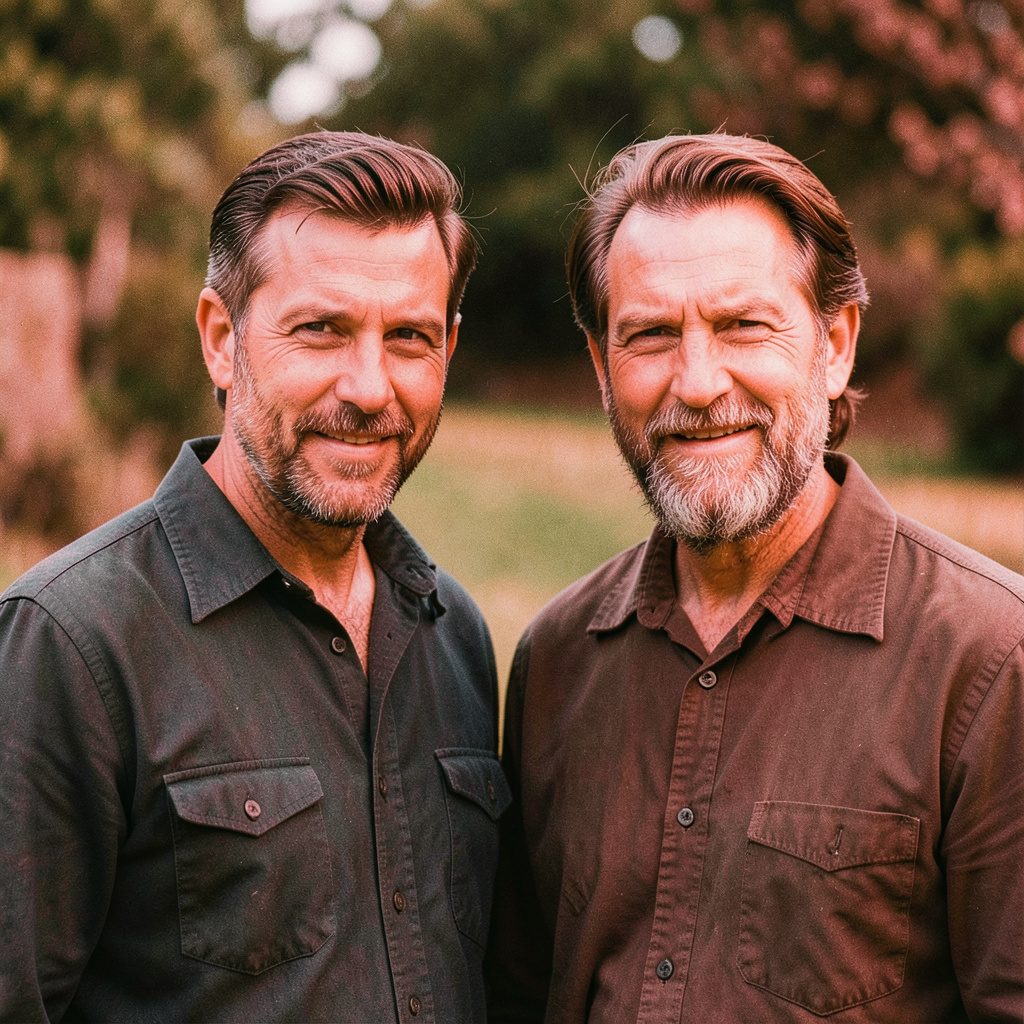
Content related to Reformed matchmaking, JRetroMatch, and Jewish matchmaking services within the context of religious observance. The article discusses Reform Judaism, the spectrum of positions on halakhic observance, and looks at how matchmaking functions within observant communities.
Age Gap Dating Advice

A discussion on age preferences in dating, referencing research guidelines and personal experiences with age-gap relationships. The piece references Psychology Today and examines whether one well-known age guideline may not work for everyone, along with personal anecdotes from readers.