Steve Platt collects articles and notes on online dating services, professional matchmaking, speed dating events, and relationship advice for a range of locations and demographics.
"If you want a more personal approach to finding matches than online dating provides, consider enlisting the help of a professional matchmaker."
The site covers speed dating events in Stratford-upon-Avon and Warwickshire, New Jersey singles and professional matchmaking with over 25 years of dating experience, the costs of online dating services including eharmony and Badoo, a guide to legitimate cougar dating sites and avoiding scams, an article on Olympic ice skating pairs and figure skating romances, and a guide for expat dating in Baku, Azerbaijan.
Speed Dating in Stratford-upon-Avon
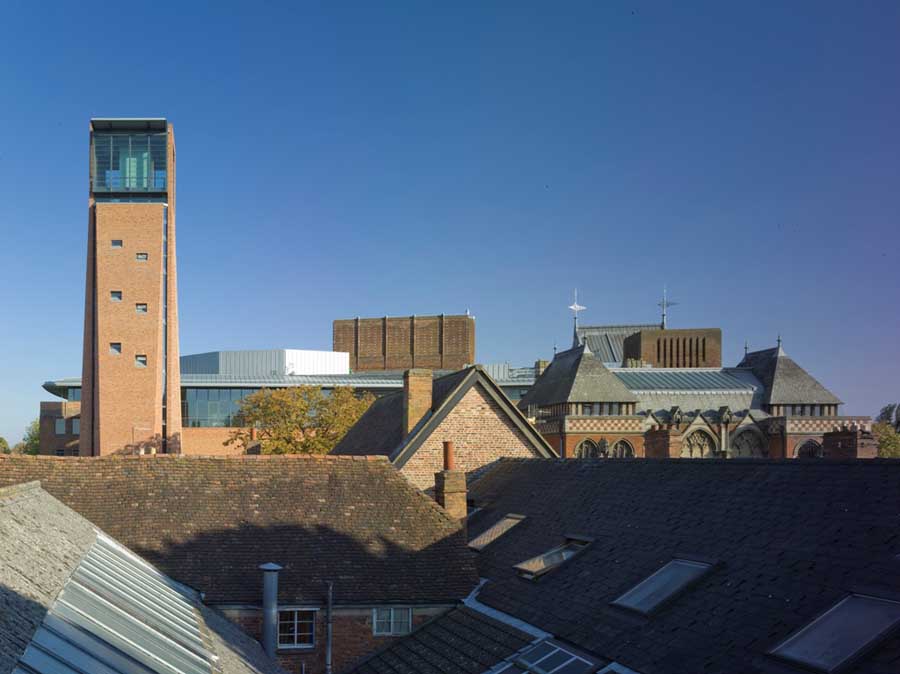
Information on speed dating events in Stratford-upon-Avon and Warwickshire, aimed at single men and women across Herefordshire and the wider region. The page also serves as an introduction agency listing and points to free join options, photos, chat rooms, interest groups, and private webmail.
Locations covered include Stratford-upon-Avon itself as well as nearby towns such as Coventry, with references extending across Warwickshire.
New Jersey Singles & Professional Matchmaking

An overview of professional matchmaking services in New Jersey, highlighting personalized coaching and over 25 years of dating experience. The article describes how a matchmaker works to understand a client's relationship goals, gathers preferences on age range, height range, smoking status, financial security, and personality traits, then brings two people together with continued feedback.
How to fix a projector lamp that shuts off too early
There's nothing worse than settling in for movie night in your Sydney lounge room, popcorn ready and lights dimmed, only for your projector to click off ten minutes into the film. The lamp counter might show plenty of hours remaining, yet the unit keeps cutting out mid-scene. Before assuming the worst and heading to your nearest Harvey Norman to price a replacement, understand that the cause is often something surprisingly simple. Clogged filters, overheating components, and misconfigured settings account for most of these interruptions, and many can be sorted out with basic tools you probably own already.
A projector lamp switching off early is rarely a sign that the bulb itself has failed. Modern lamps rely on thermal cutoffs, sensor-driven protection circuits, and smart power management that all work together to extend lamp life. When any of those systems misread conditions, the lamp powers down even though the bulb is perfectly fine. Working out which system is tripping and why is the key to getting your projector back to running a full two-hour film, a State of Origin match, or whatever else you had planned for the evening.
This guide walks through the most frequent triggers of early lamp shutdown, the steps to diagnose the actual cause, and the practical repairs you can complete in your own garage or spare room. Where the problem points to internal electronics or genuine component failure, we'll cover when it's worth bringing in specialist repair technicians rather than risking further damage by opening the case yourself.
Why projector lamps switch off prematurely
Projector lamps run extremely hot, often reaching internal temperatures above 1000°C at the arc tube. To survive, every model from a portable BenQ to an in-living-room Epson relies on a constant stream of ambient air pulled across the lamp housing. When that airflow is restricted, or when internal sensors detect temperatures above safe thresholds, the protection circuit cuts power to the lamp almost instantly. In Australian homes, particularly in Brisbane during a humid February afternoon or in Perth when the mercury hits 38°C, ambient conditions can push a borderline cooling system past its limit.
The most frequent triggers include a blocked or dirty air filter, a failing cooling fan, a faulty thermistor on the lamp housing, a worn-out lamp nearing end of life, or unstable mains power. If your setup includes a home theatre receiver running hot beside the projector, the receiver's own heat output can raise the inlet temperature around the projector. The same overheating principles that affect your AV gear are explained in detail in this why AV equipment overheats resource, so if you've recently moved your components or stacked them closer together, that change might be what triggered the problem in the first place.
Less common but worth checking are the lamp door interlock switch, the ballast board, and the main control board. A loose lamp door or a misaligned lamp module can fool the interlock sensor into thinking the unit is unsafe to run. Power supply issues are particularly common in older suburbs of Adelaide or Melbourne where the wiring hasn't been updated in decades, and a fluctuating 230V supply can cause the lamp to cycle on and off repeatedly throughout a single viewing session.
Cleaning the air filter and checking airflow
The air filter is the first and most important component to check, and it's the part most often neglected. In local conditions, particularly when westerlies carry particles from the inland or during bushfire season when smoke clogs everything, the filter can become restricted far faster than the manual suggests. Most manufacturers recommend cleaning every 100 to 300 hours, but in dusty environments you should halve those intervals to keep the projector happy.
Open the filter cover, usually on the side or front of the unit, and remove the foam or mesh element. Hold it up to a window or torch — if light barely passes through, it needs attention. Foam filters can usually be washed in warm soapy water, rinsed thoroughly, and left to dry completely before reinstallation. Paper or HEPA-style filters should be gently vacuumed with a soft brush attachment rather than washed. Never run the projector without a filter in place; dust drawn directly onto the lamp and LCD panels causes permanent damage and voids most warranties sold through Australian retailers like JB Hi-Fi.
While the filter is out, use a can of compressed air or a soft brush to clear dust from the intake vents and the lamp housing area. Pay particular attention to the slots around the exhaust port at the rear. If the projector is ceiling-mounted, gravity will pull dust up into the unit over time, so a quarterly clean is wise regardless of usage hours. Once everything is reassembled, run the projector for a full hour to confirm the airflow has been restored before assuming the problem is solved.
Inspecting cooling fans and thermal sensors
If cleaning the filter doesn't resolve the issue, the next suspect is the cooling fan. Most projectors have one or two fans dedicated to the lamp housing, and a third for general electronics. A failing fan might still spin, but at reduced speed, producing a noise change you might notice — a higher-pitched whine or a rattling bearing. Unplug the projector, let it cool for at least 30 minutes, then open the service panel according to your model's service procedure. The fan connectors are usually obvious three or four-pin plugs near the lamp housing.
Visually inspect the fan blades for cracks or accumulated dust. Spin the fan manually with a clean fingertip or a cotton bud — it should turn smoothly for several seconds with slight resistance. If it grinds, wobbles, or stops almost immediately, the bearing is worn and the fan needs replacement. Fan assemblies for common models are available from Australian suppliers and online retailers for between $25 and $80, and replacement is usually a matter of unplugging the old unit and mounting the new one with the same screws.
The thermal sensors, or thermistors, sit against the lamp housing and feed temperature data back to the main board. Over time, these sensors can drift out of calibration or develop a poor thermal bond with the housing if the thermal paste dries out. Diagnosing and replacing these sensors is best left to professionals unless you have solid electronics experience, as the sensors are delicate and the wrong replacement can cause worse shutdowns. The same goes for the ballast board, which provides the high-voltage strike and regulated current to the lamp. Ballast failures can mimic lamp failures, and a new ballast runs close to the cost of a new projector, so it's worth getting a proper diagnosis from a qualified technician before ordering parts.
Examining the lamp module and power supply
Even if the lamp counter shows plenty of hours remaining, the lamp itself can be the issue. Lamp life figures assume ideal conditions — cool ambient temperature, stable power, and proper airflow. In a hot Adelaide summer with the air conditioning struggling, or in a tin shed in the Top End where the projector runs for an outdoor movie night, real-world life is often much shorter. A lamp nearing end of life frequently shows symptoms before the counter reaches zero, with one of the most telling being sudden shutdowns after running for a while as the arc becomes unstable.
Inspect the lamp module by removing it according to your model's procedure, usually after the projector has cooled for at least an hour. Check for obvious signs of damage: a cracked arc tube, blackening on the inside of the bulb, or a distorted reflector. Even small changes in the lamp's appearance can mean replacement is due. When buying a replacement lamp in Australia, stick to genuine OEM modules from authorised distributors. Aftermarket lamps are widely available from places like Bunnings or online marketplaces, and while the price varies, the cheaper options often have shorter life and inconsistent colour output. For common models like the Epson EH-TW series or BenQ W series, genuine lamps typically cost between $150 and $400.
Power supply issues deserve attention too. Australian mains power is nominally 230V at 50Hz, but in rural areas or during peak air conditioning loads in summer, voltage can sag well below 220V. A small UPS designed for AV equipment, or at minimum a good-quality surge protector, can stabilise the supply and prevent the lamp from cycling. If your projector shares a power outlet with a high-draw device like a portable air conditioner or a vacuum cleaner on the same circuit, move it to a dedicated outlet on a different circuit.
Settings, timer resets, and when to call a professional
Sometimes the cause isn't hardware at all but software. Many projectors have eco modes, high-altitude modes, and power management settings that affect lamp behaviour. If you've recently changed the room layout, mounted the projector at a different height, or moved to a new location such as a holiday house in Byron Bay, the high-altitude mode might need to be toggled. At elevations above 1500 metres, which doesn't affect most Australian cities but matters if you've installed the unit in a mountain cottage in the Snowy Mountains or a high-set Queenslander with poor ventilation, the thinner air reduces cooling efficiency and triggers shutdowns.
After replacing a lamp, the lamp hour counter must be reset for accurate tracking. This is usually found in the setup menu under "Information" or "Reset". If you've replaced the lamp but not reset the timer, the projector may continue using the old lamp's hours and trigger a "lamp end of life" warning that causes shutdowns. Consult your owner's manual for the specific reset procedure for your model, as the button combination varies between manufacturers. Some models require the unit to be plugged in but powered off, others require holding a specific button while powering on.
If you've worked through the filter, fan, lamp, and settings without resolution, the problem likely lies in the main board, ballast, or a wiring fault that isn't safely accessible without proper equipment. At this point, continuing to troubleshoot risks electrical damage or personal injury, particularly with the high-voltage sections of the ballast circuit that can retain charge even when unplugged. This is also the point where the cost of repair starts to approach the cost of replacement for older projectors.
| Option | Typical cost in AUD | Best for | Lamp life rating | Warranty |
|---|---|---|---|---|
| Genuine OEM lamp | $150–$400 | Long-term owners wanting factory colour accuracy | 2000–5000 hours | 90–180 days |
| Compatible aftermarket lamp | $60–$150 | Budget-conscious users, secondary rooms | 1500–3000 hours | 30–90 days |
| Refurbished or reclaimed lamp | $80–$180 | Environmentally conscious buyers, older models | 1500–2500 hours | 30–60 days |
| Projector replacement | $1500–$5000+ | Units over 5 years old, frequent heavy use | 2000–5000 hours (new unit) | 1–2 years |
A repair quote over 50% of the replacement cost, especially on a unit more than five years old, generally favours buying a new projector. New entry-level 4K projectors from brands sold through Australian retailers like Epson, BenQ, and Optoma start around $1500, while high-end models run $5000 and up. If your current setup includes a home theatre receiver and surround speakers, you might also consider whether it's time to refresh your audio with a 5.1 surround sound setup alongside the new projector, as the two are usually upgraded together for a balanced result. Before disposing of an old projector, remember that projector lamps contain mercury and should not go in household rubbish; most councils from the City of Sydney to the City of Darwin run household chemical collection programs that accept them.
Practical habits to prevent early lamp shutdown
- Clean the air filter every 100 hours of use, or every 50 hours if the projector runs in a dusty environment such as near a busy road, in a workshop, or during bushfire season.
- Keep the projector in a well-ventilated spot with at least 30 centimetres of clearance on all intake and exhaust vents, and avoid stacking it directly on top of other AV equipment that produces heat.
- Run the projector in eco or economy mode whenever the room lighting allows, as this reduces heat output and extends lamp life significantly.
- Use a UPS unit or at minimum a surge protector to guard against voltage fluctuations, particularly in rural areas or older homes with aging wiring.
- Avoid moving the projector immediately after use while the lamp and internal components are still hot, as jarring a hot lamp can damage the filament or arc tube.
- Replace the lamp at the first sign of colour shift, flickering, or sudden brightness changes, rather than waiting for the hour counter to reach zero.
Legitimate Cougar Dating Sites
A guide to finding legitimate cougar dating sites, avoiding scams, and getting good results on platforms such as CougarDate.com, Cougar Life, and Adult FriendFinder. The article lists seven cougar dating sites, examines whether CougarDate.com is a scam, and includes a separate list of free dating and hookup sites.
Olympic Ice Skating Pairs and Romances

An article discussing prominent figure skating romances, marriages, and couples among Olympic ice skating pairs. It profiles eight Olympic ice skating pairs who are couples in real life and explains the required elements of pair skating, including lifts, twist lifts, throw jumps, jumps, and spins.
Expat Dating in Baku

A guide for expatriates looking to date in Baku, Azerbaijan. Topics include social life for expats, safety and comfort in areas like Downtown Baku, the visa process, getting around by mass transit, and monthly events for expatriates. The piece also references Baku hotels and places to stay.
Reformed Matchmaking and Jewish Dating

Content related to Reformed matchmaking, JRetroMatch, and Jewish matchmaking services within the context of religious observance. The article discusses Reform Judaism, the spectrum of positions on halakhic observance, and looks at how matchmaking functions within observant communities.
Age Gap Dating Advice

A discussion on age preferences in dating, referencing research guidelines and personal experiences with age-gap relationships. The piece references Psychology Today and examines whether one well-known age guideline may not work for everyone, along with personal anecdotes from readers.