
Steve Platt collects articles and notes on online dating services, professional matchmaking, speed dating events, and relationship advice for a range of locations and demographics.
"If you want a more personal approach to finding matches than online dating provides, consider enlisting the help of a professional matchmaker."
The site covers speed dating events in Stratford-upon-Avon and Warwickshire, New Jersey singles and professional matchmaking with over 25 years of dating experience, the costs of online dating services including eharmony and Badoo, a guide to legitimate cougar dating sites and avoiding scams, an article on Olympic ice skating pairs and figure skating romances, and a guide for expat dating in Baku, Azerbaijan.
Speed Dating in Stratford-upon-Avon

Information on speed dating events in Stratford-upon-Avon and Warwickshire, aimed at single men and women across Herefordshire and the wider region. The page also serves as an introduction agency listing and points to free join options, photos, chat rooms, interest groups, and private webmail.
Locations covered include Stratford-upon-Avon itself as well as nearby towns such as Coventry, with references extending across Warwickshire.
New Jersey Singles & Professional Matchmaking

An overview of professional matchmaking services in New Jersey, highlighting personalized coaching and over 25 years of dating experience. The article describes how a matchmaker works to understand a client's relationship goals, gathers preferences on age range, height range, smoking status, financial security, and personality traits, then brings two people together with continued feedback.
Enable 4K HDR pass-through on your AV receiver
A growing number of Australian households are turning loungerooms and dedicated media rooms into genuine cinema spaces, pairing big-screen projectors with AV receivers that sit at the heart of the system. With Foxtel's iQ5, the Apple TV 4K, gaming consoles and Ultra HD Blu-ray players all competing for a slice of your HDMI bandwidth, getting 4K HDR pass-through working correctly has become essential. Many owners of mid-range receivers, particularly models sold through JB Hi-Fi or Harvey Norman over the last few years, find that their gear supports the feature in theory yet refuses to deliver it cleanly in practice. Learn more about ネットワークの無線lan子機をアンテナ増設で飛距離を伸ばす具体的方法.
This guide walks through the hardware checks, cable choices, menu settings and connection rules that make HDR pass-through behave the way it should. Whether your gear lives in a Sydney apartment, a Brisbane family home or a converted shed in regional Victoria, the underlying principles are identical. The difference is usually a combination of HDMI version mismatches, outdated firmware and the wrong cable certification.
What 4K HDR pass-through actually does
Pass-through is the receiver's ability to receive a 4K signal from a source device, recognise its high dynamic range metadata, and forward that signal untouched to a display or projector. The receiver acts as a transparent pipeline rather than processing the video, so the original colour space, chroma subsampling and frame rate all reach the screen exactly as the source intended. When the chain is intact, you see the brighter highlights, deeper shadows and wider colour gamut that distinguish HDR10, HDR10+, Dolby Vision and HLG from plain SDR.
The catch is bandwidth. A 4K/60 signal with 4:4:4 chroma and 10-bit colour demands roughly 18 Gbps, while uncompressed 4K/120 with 12-bit HDR pushes past 40 Gbps. Anything older than HDMI 2.0 simply cannot carry that much data, which is why entry-level receivers from the early 2010s were limited to 4K at 30 Hz or required colour compression. Modern AVRs from Denon, Marantz, Yamaha, Onkyo and Pioneer handle the full bandwidth, but only when every link in the chain, from source to speaker-back-of-rack cabling, supports the same standard.
Checking your receiver's HDMI capabilities
Before touching a single cable, identify the HDMI version printed on the back of the unit or listed in the specifications sheet. A receiver labelled HDMI 2.0 with HDCP 2.2 will handle 4K/60 HDR10, but typically cannot pass 4K/120, VRR or ALLM, features that matter to PlayStation 5 and Xbox Series X owners. HDMI 2.1 brings the full 48 Gbps pipeline and unlocks those gaming extras, alongside eARC for lossless audio return from a compatible display.
HDCP 2.2 is the other critical spec. It is the copy-protection scheme that 4K sources use to encrypt their output, and any device in the chain without it will either downgrade the signal to 1080p or display a blank screen. Most receivers sold in Australia from 2015 onwards include HDCP 2.2 on at least some inputs, but the label is often hidden on the rear panel near the relevant socket. A useful primer on HDMI ARC and eARC explains how these protocols layer on top of the HDMI base spec, which is helpful if you also plan to send Atmos audio back from your projector.
Firmware updates frequently unlock new formats or fix handshake bugs, so it pays to check the manufacturer's Australian support site for the latest file. Denon and Marantz owners in particular have seen Dolby Vision pass-through added well after launch through a simple USB update, and Yamaha's recent receivers occasionally receive DTS:X Pro support through a similar channel.
Selecting cables that handle 4K HDR
Cable quality matters more than price in this category. The official certification to look for is "Ultra High Speed" for HDMI 2.1 applications, or "Premium High Speed" for HDMI 2.0 setups. Both labels must carry a scannable QR hologram from the HDMI Licensing Administrator to be legitimate, and Australian retailers such as The Good Guys and Bunnings typically stock certified options from AudioQuest, Belkin and Monster.
Length is the next consideration. Passive HDMI cables lose signal integrity beyond roughly 8 metres at full 4K/60 bandwidth, particularly when run behind walls or through conduit. For longer runs, consider an active fibre-optic HDMI lead, which converts the signal to light and back again. These are slightly dearer, often starting around 120 AUD for a 10-metre run, but they sidestep the handshake dropouts that plague long copper cables. Active cables are also directional, so check the source and display ends before feeding them through wall cavities.
Avoid the bargain-bin leads sold at service stations or unbranded online listings. Even if they claim HDMI 2.1 support, a cable that fails the certification test will silently drop to 4K/30, 8-bit colour and no HDR, which is the most common reason pass-through appears to fail when the receiver is perfectly capable.
Configuring the receiver for pass-through
Power everything off before reconnecting. Once cables are seated firmly, switch the receiver on first, then the projector or display, and finally the source. This order helps the HDCP handshake complete cleanly and avoids the "handshake storm" that can leave a device in a confused state.
Enter the receiver's setup menu and look for the video or HDMI settings submenu. On most Denon and Marantz units this sits under "Video" → "HDMI Video Output" → "4K/8K Signal Format", where you must select "Enhanced" rather than the default "Standard". Yamaha receivers label the same option "4K Mode" with choices for Mode 1 or Mode 2, where Mode 2 unlocks 4K/60 4:4:4. Onkyo and Pioneer models typically place it under "Hardware" → "HDMI" → "4K Scaling" or "HDMI 4K Signal Format". Select the most permissive option the unit offers.
Next, confirm the HDMI output resolution is set to "Auto" or "4K" rather than 1080p pass-through, and that any video processing features such as motion smoothing or detail enhancement are disabled, since they can interfere with the bit-perfect pass-through path. Save the settings and power-cycle the entire system.
Connecting sources and your projector
Plug each source into a labelled HDMI input on the receiver, ideally grouping 4K-capable ports together. Many receivers only apply Enhanced mode to specific inputs, often the first two or three, so read the rear-panel silk-screening carefully. A Foxtel iQ5, for example, belongs in a designated 4K port rather than an auxiliary one reserved for older gear like a VCR or an early PlayStation.
The output side runs a single HDMI cable from the receiver's "Monitor" or "ARC/eARC" output to the projector's matching input. If your projector supports eARC and you watch streaming apps through it directly, this single cable will also carry Atmos or DTS:X audio back to the receiver. The reference guide on home theater network setup covers how to integrate smart projectors and voice assistants into the same system without disrupting the HDMI chain.
For racks where the receiver sits in a separate room or a rear cupboard, wireless HDMI extenders are an option, though they sometimes struggle with the 18 Gbps envelope. If you are running network cabling anyway to support NBN-fed streaming, the same Cat6 run can carry HDMI through an HDBaseT extender, which is more reliable for long distances. HDBaseT also tolerates the tight bends often found in older Australian homes with solid brick or concrete walls.
Solving common pass-through issues
A blank screen usually points to an HDCP failure. Swap cables one at a time to isolate the bad link, and confirm the projector is set to accept the HDMI signal rather than its analogue inputs. If the picture appears but colours look washed out or grey, the cable has likely fallen back to 4:2:0 subsampling, which is the negotiation fallback when the link cannot sustain full bandwidth.
HDR not engaging is often a source-side issue. Apple TV 4K owners should check "Match Content" under video settings, and Foxtel iQ5 users may need to enable "HDMI Enhanced Format" in the box's display menu. For Dolby Vision specifically, the AVR must explicitly support the format, and both the source and display must be on the same DV profile, typically Low Latency for projectors.
Audio dropouts and lip-sync errors are almost always caused by the display's internal processing delaying the picture relative to the audio. Switch the receiver's "AV Sync" or "Lip Sync" adjustment to auto, or manually offset the audio by 40 to 80 milliseconds if the projector does not support auto-sync. Updating the projector's firmware often resolves these timing drift issues as well.
For owners running wireless subwoofers, smart remotes or streaming dongles alongside the projector, similar dropouts can come from a congested Wi-Fi band. A solid remedy is Wi-Fi antenna upgrades on the router or access point, which often clears up the audio cut-outs that masquerade as HDMI problems.
Finally, if you see sparkles, flashes or intermittent signal loss during a screening of a cricket match or a Foxtel 4K broadcast, the culprit is usually a marginal cable run. Replace the cheapest cable in the chain first; in most Australian home theatres, that turns out to be the lead buried in the wall cavity.
| HDMI version | Max resolution / refresh | HDR support | Bandwidth | Typical release |
|---|---|---|---|---|
| HDMI 1.4 | 4K/30, 1080p/120 | No | 10.2 Gbps | 2009 |
| HDMI 2.0 | 4K/60 4:2:0 | HDR10 only | 18 Gbps | 2013 |
| HDMI 2.0b | 4K/60 4:2:0 | HDR10, HLG | 18 Gbps | 2016 |
| HDMI 2.1 | 4K/120 4:4:4, 8K/60 | HDR10, HDR10+, DV, HLG | 48 Gbps | 2017 onward |
Legitimate Cougar Dating Sites

A guide to finding legitimate cougar dating sites, avoiding scams, and getting good results on platforms such as CougarDate.com, Cougar Life, and Adult FriendFinder. The article lists seven cougar dating sites, examines whether CougarDate.com is a scam, and includes a separate list of free dating and hookup sites.
Olympic Ice Skating Pairs and Romances

An article discussing prominent figure skating romances, marriages, and couples among Olympic ice skating pairs. It profiles eight Olympic ice skating pairs who are couples in real life and explains the required elements of pair skating, including lifts, twist lifts, throw jumps, jumps, and spins.
Expat Dating in Baku

A guide for expatriates looking to date in Baku, Azerbaijan. Topics include social life for expats, safety and comfort in areas like Downtown Baku, the visa process, getting around by mass transit, and monthly events for expatriates. The piece also references Baku hotels and places to stay.
Reformed Matchmaking and Jewish Dating
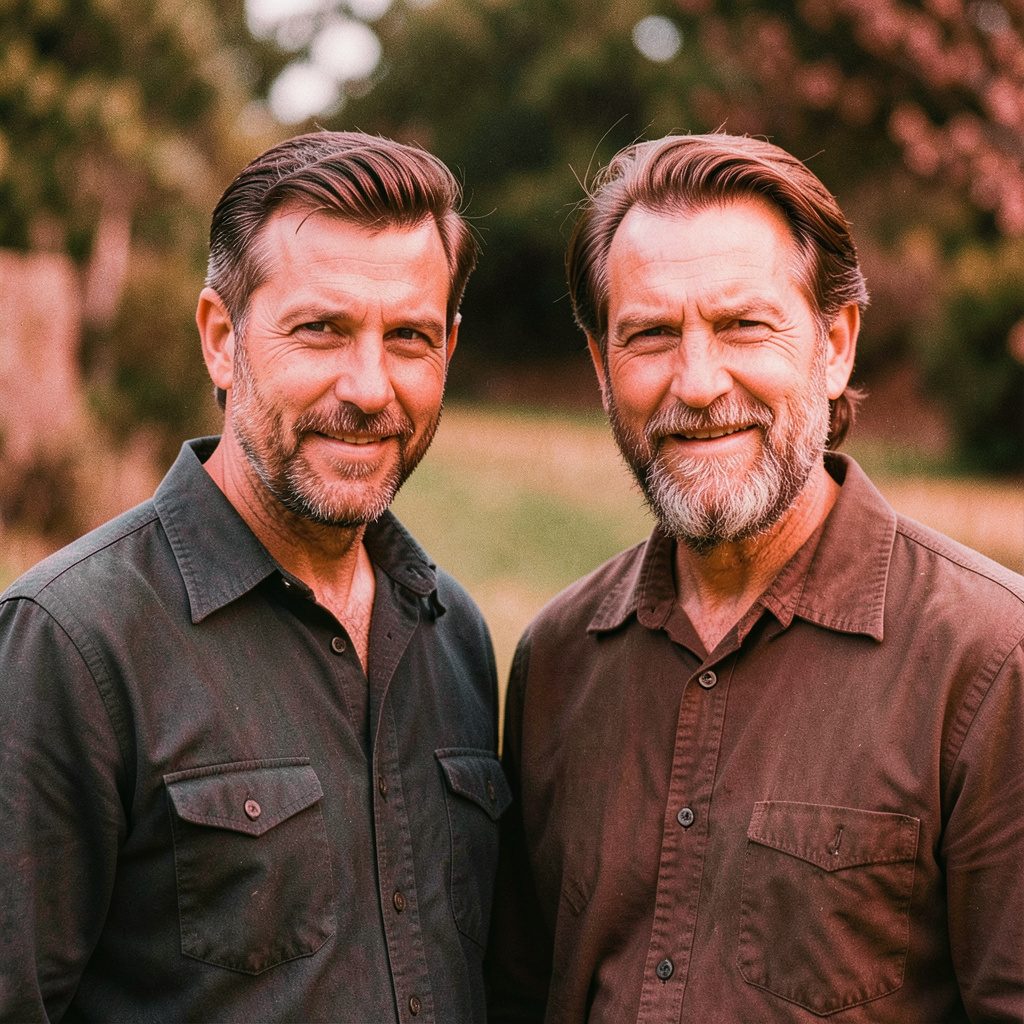
Content related to Reformed matchmaking, JRetroMatch, and Jewish matchmaking services within the context of religious observance. The article discusses Reform Judaism, the spectrum of positions on halakhic observance, and looks at how matchmaking functions within observant communities.
Age Gap Dating Advice

A discussion on age preferences in dating, referencing research guidelines and personal experiences with age-gap relationships. The piece references Psychology Today and examines whether one well-known age guideline may not work for everyone, along with personal anecdotes from readers.