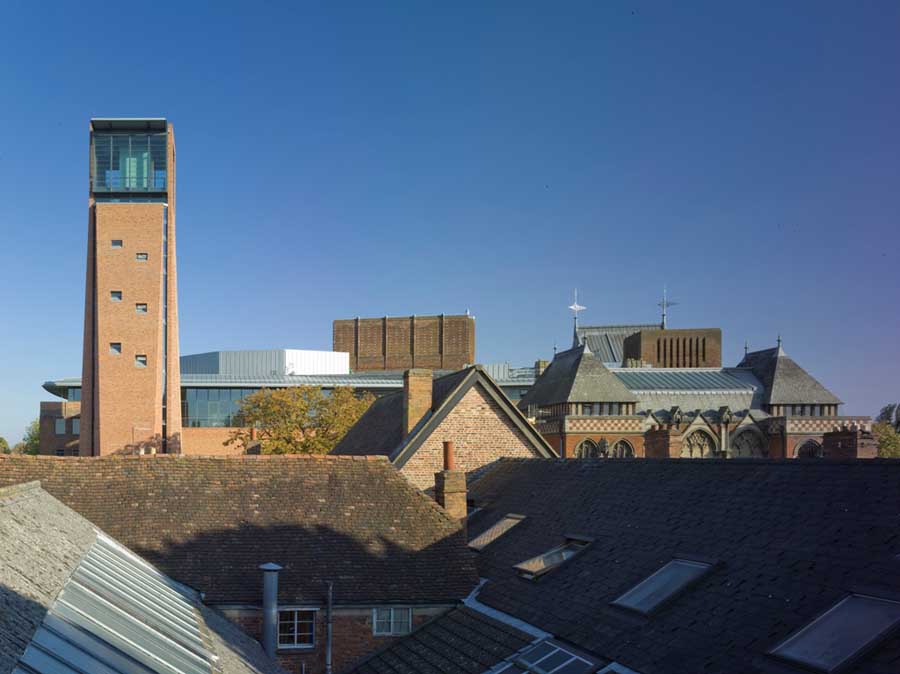
Steve Platt collects articles and notes on online dating services, professional matchmaking, speed dating events, and relationship advice for a range of locations and demographics.
"If you want a more personal approach to finding matches than online dating provides, consider enlisting the help of a professional matchmaker."
The site covers speed dating events in Stratford-upon-Avon and Warwickshire, New Jersey singles and professional matchmaking with over 25 years of dating experience, the costs of online dating services including eharmony and Badoo, a guide to legitimate cougar dating sites and avoiding scams, an article on Olympic ice skating pairs and figure skating romances, and a guide for expat dating in Baku, Azerbaijan.
Speed Dating in Stratford-upon-Avon
Information on speed dating events in Stratford-upon-Avon and Warwickshire, aimed at single men and women across Herefordshire and the wider region. The page also serves as an introduction agency listing and points to free join options, photos, chat rooms, interest groups, and private webmail.
Locations covered include Stratford-upon-Avon itself as well as nearby towns such as Coventry, with references extending across Warwickshire.
New Jersey Singles & Professional Matchmaking

An overview of professional matchmaking services in New Jersey, highlighting personalized coaching and over 25 years of dating experience. The article describes how a matchmaker works to understand a client's relationship goals, gathers preferences on age range, height range, smoking status, financial security, and personality traits, then brings two people together with continued feedback.
A Practical Surge Protection Plan for Home Theatre Gear
Australia delivers some of the most spectacular electrical weather on the planet, and anyone who has watched a summer thunderhead climb the Brisbane skyline or felt the crack of dry lightning over the Pilbara knows how unpredictable our grid can be. A home theatre packed with a projector, an AV receiver, a subwoofer, and a stack of source components represents thousands of dollars of sensitive electronics sitting behind a single power outlet. A well-designed surge protection strategy treats that outlet like a frontline checkpoint, not the only defence.
The principles behind protecting a dedicated theatre are not exotic, but the execution matters. Australian homes run on 230 to 240 volts at 50 hertz, which is the nominal supply across the eastern states, Western Australia, and most regional centres. That is generally less harsh on electronics than the 120-volt supplies seen in North America, yet the transients on our network can be just as violent because the cabling infrastructure stretches across enormous distances and is exposed to storm cells, salt-laden coastal air, and ageing transformers in the outer suburbs of cities like Adelaide and Hobart. A plan should cover mains spikes, signal-line surges, and battery-backed continuity so that a single bad event does not cascade through the rack.
The starting point is honesty about what you own. Walk around the room and write down every device, every cable run that leaves the building such as the antenna, satellite dish, ethernet, or Foxtel feed, and every socket that feeds the rack. Until that inventory is mapped, you cannot sensibly decide where protection belongs or how much it should cost. The good news is that thoughtful preparation costs a fraction of replacing a blown HDMI board or a projector mainboard after a close lightning strike, and a few hours of work before storm season saves weeks of frustration after it.
Mapping your theatre and the risks around it
Begin with the physical stack. A typical Australian theatre might include a laser or lamp projector, an AV receiver or preamp-processor, a subwoofer, a Blu-ray or media player, a gaming console, and a streaming box such as an Apple TV 4K or Nvidia Shield. Each of those has a power inlet, and many also have antenna, satellite, HDMI, ethernet, and speaker terminals that exit the metalwork. Each of those paths is a potential entry point for a transient, so optimising subwoofer placement and arranging other components so that cabling is tidy is part of the same discipline as surge planning. Short, well-routed cable runs reduce the length of antenna acting as a lightning rod and limit loop areas that pick up induced voltages.
A useful starting inventory covers:
- Projector and its ceiling mount cabling
- AV receiver, amplifier, or preamp-processor
- Subwoofer and any bass shakers
- Source players (Blu-ray, media box, gaming console)
- Antenna, satellite, and ethernet feeds that leave the building
- Network gear such as the modem and router that feed the theatre
Then look outward from the equipment. Where does the roof-mounted VAST or Foxtel dish sit relative to the projector and mains cabling? How far is the nearest power pole, and is the home in a known strike corridor like the ranges west of Sydney or the Top End during the months from November to March? Lightning does not need to strike the house directly. A strike within a few hundred metres can induce enough current on long cable runs to destroy input stages on receivers and projectors. Even indirect grid events, such as a transformer failure in a nearby street, can push a several-thousand-volt spike into household wiring for a few cycles. Once you have mapped the gear and the surroundings, you can decide whether the home needs whole-of-home protection at the switchboard, point-of-use protection at each outlet, or both.
Understanding the threat profile in Australian conditions
The surge threats that matter for a home theatre are not all the same. A nearby direct strike is a high-energy, short-duration event that can overwhelm almost anything short of a properly grounded commercial installation. A grid switching event, such as a substation recloser operating after a branch falls on a line in suburban Melbourne, is a faster but lower-energy transient that still destroys unprotected electronics. Static discharge during a dry thunderstorm inland from Perth can be enough to confuse a projector's handshake logic or corrupt a firmware update in progress. Understanding which threats are most likely is the heart of planning, because the protective hardware differs for each.
Distance to the coast matters too. Salt-laden air accelerates corrosion on antenna fittings, F-connectors, and exposed copper, which raises resistance and creates hotspots that misbehave during storms. The salt-air belt stretching from Coffs Harbour down through Wollongong and across to Geelong is a good example where yearly inspection of rooftop fittings pays for itself. Rural properties with long overhead service drops from a distant transformer face a different risk profile from inner-city apartments in Brisbane or Perth, where the cable run from the street is minimal but the local grid is dense and switching events are common. Each profile calls for slightly different choices at the switchboard and at the rack.
Building a layered defence
Effective surge planning is layered, not single-point. The first layer sits at the switchboard. A Type 1 or Type 2 surge diverter mounted at the main board clamps large transients before they reach the house wiring. In suburban switchboards these are increasingly common, but older homes in suburbs built around Gosford or Elizabeth may still rely on budget ceramic fuses and offer no installed surge protection at all. An electrician can install a DIN-rail surge device for a few hundred dollars, and it acts as the broad shield for everything downstream. The second layer is point-of-use protection, where a quality powerboard with a high joule rating sits behind the projector, source gear, and subwoofer to clean up whatever gets past the first.
The third layer is signal-line protection. A coaxial surge arrestor on the antenna or satellite feed, an ethernet surge protector on any Cat6 run coming from a distant garage or home office, and properly shielded HDMI cables all reduce the chance of a transient sneaking in through a path you might have forgotten. Receivers and source components with antenna inputs are particularly vulnerable, especially in homes that use amplified antennas or have rooftop VAST dishes. HDMI cables longer than five metres can act as pickup loops for nearby strikes, so active optical HDMI leads with proper grounding are worth considering for ceiling-mounted projector runs that stretch across a room.
The fourth layer, often overlooked, is battery backup. A small uninterruptible power supply feeding the AV receiver, the modem, and any streaming device ensures that brief dropouts clean back to clean power and gives the surface a graceful shutdown window during a brownout. Brownouts are common in regional Victoria on peak heatwave days, and they stress switch-mode power supplies in receivers far more than steady-state operation does. A UPS also protects against the data corruption that happens when a streaming box or PVR loses power mid-write.
Choosing hardware that actually protects
Not every product on the Australian shelf delivers real protection. Look for surge devices that carry a stated joule rating, a low clamping voltage often quoted as let-through voltage, and a response time measured in nanoseconds. Devices that comply with AS/NZS 1768 or carry independent test certification from a recognised lab are the ones to trust. Be wary of unbranded powerboards sold at discount stores in suburban strip malls; their internal MOVs may be undersized or absent entirely. A typical quality powerboard might quote 1,800 to 4,000 joules, and the higher figure is appropriate for a rack that includes a projector and receiver.
For switchboard-mounted devices, an electrician will select based on the prospective fault current at the property. Type 1 devices are engineered for properties with overhead service drops and lightning exposure, Type 2 for general domestic use, and Type 3 for point-of-use. Many electricians in the eastern states recommend a Type 1+2 combination for properties in the wet tropics, because it covers direct and induced events at the same enclosure. Coaxial surge arrestors should match the frequency range of the signal they carry; a VAST or Foxtel line uses different frequencies than a terrestrial UHF antenna, and the wrong arrestor can attenuate the signal to the point of dropout.
When budgeting, treat protection as a percentage of the gear it covers. A protection strategy that costs five to ten per cent of the value of the theatre is a reasonable starting point. Anything less leaves the system exposed, and anything more is likely buying capacity you do not need. Remember that surge devices are sacrificial; their job is to absorb energy and fail safely, which means they need to be checked periodically and replaced after a major event. Investing in quality hardware is one of those decisions that ripples outward through the household, because the theatre is often the centre of family life on a quiet Friday night.
Installation, maintenance, and long-term habits
The best protection scheme in the world is useless if the wiring behind it is wrong. Every surge device needs a low-resistance path to earth, and that path needs to be intact. In older Queenslander or Californian bungalow homes in suburbs like Paddington or Fremantle, the earth stake may be corroded or absent entirely. Have an electrician test the earth continuity at the rack and at the antenna mast before installing any surge gear. A surge diverter without a solid earth is just a fuse waiting to fail, and a quality install starts with that baseline.
A yearly habit built around storm season pays for itself. In the lead-up to November, walk the property and work through this short routine.
- Check the antenna mast and its earth strap for corrosion or looseness
- Inspect F-connectors and reseat any that show green or white residue
- Test the surge indicators on powerboards and replace any that have gone dark
- Verify UPS batteries hold charge for their rated runtime under load
- Confirm the switchboard diverter status LED still shows healthy operation
Beyond the wet-season storms, the human side of the hobby matters too. Losing a beloved theatre to a preventable surge can be quietly devastating, and rebuilding thoughtfully is part of any burnout to balance journey that a hobbyist eventually faces. Taking an hour before the first storm to walk the plan through is far easier than taking a month to source replacement boards while the rest of the household watches a blank wall.
Finally, think of the theatre as a shared space rather than a private one. Family members, partners, and friends gather around it, and the choices made about protection ripple outward. Many Australians spend weekend evenings on the couch or out on the patio with loved ones, and the gear that brings people together deserves the same care as any other part of the home. Investing in protection is, in its own quiet way, an act of building a shared home that lasts. With a layered plan in place, a quality surge diverter at the switchboard, point-of-use protection on the rack, signal-line arrestors on the antenna and ethernet, and a small UPS for graceful shutdowns, the theatre can ride out another summer of spectacular Australian storms without drama.
Legitimate Cougar Dating Sites

A guide to finding legitimate cougar dating sites, avoiding scams, and getting good results on platforms such as CougarDate.com, Cougar Life, and Adult FriendFinder. The article lists seven cougar dating sites, examines whether CougarDate.com is a scam, and includes a separate list of free dating and hookup sites.
Olympic Ice Skating Pairs and Romances

An article discussing prominent figure skating romances, marriages, and couples among Olympic ice skating pairs. It profiles eight Olympic ice skating pairs who are couples in real life and explains the required elements of pair skating, including lifts, twist lifts, throw jumps, jumps, and spins.
Expat Dating in Baku

A guide for expatriates looking to date in Baku, Azerbaijan. Topics include social life for expats, safety and comfort in areas like Downtown Baku, the visa process, getting around by mass transit, and monthly events for expatriates. The piece also references Baku hotels and places to stay.
Reformed Matchmaking and Jewish Dating
Content related to Reformed matchmaking, JRetroMatch, and Jewish matchmaking services within the context of religious observance. The article discusses Reform Judaism, the spectrum of positions on halakhic observance, and looks at how matchmaking functions within observant communities.
Age Gap Dating Advice

A discussion on age preferences in dating, referencing research guidelines and personal experiences with age-gap relationships. The piece references Psychology Today and examines whether one well-known age guideline may not work for everyone, along with personal anecdotes from readers.