Steve Platt collects articles and notes on online dating services, professional matchmaking, speed dating events, and relationship advice for a range of locations and demographics.
"If you want a more personal approach to finding matches than online dating provides, consider enlisting the help of a professional matchmaker."
The site covers speed dating events in Stratford-upon-Avon and Warwickshire, New Jersey singles and professional matchmaking with over 25 years of dating experience, the costs of online dating services including eharmony and Badoo, a guide to legitimate cougar dating sites and avoiding scams, an article on Olympic ice skating pairs and figure skating romances, and a guide for expat dating in Baku, Azerbaijan.
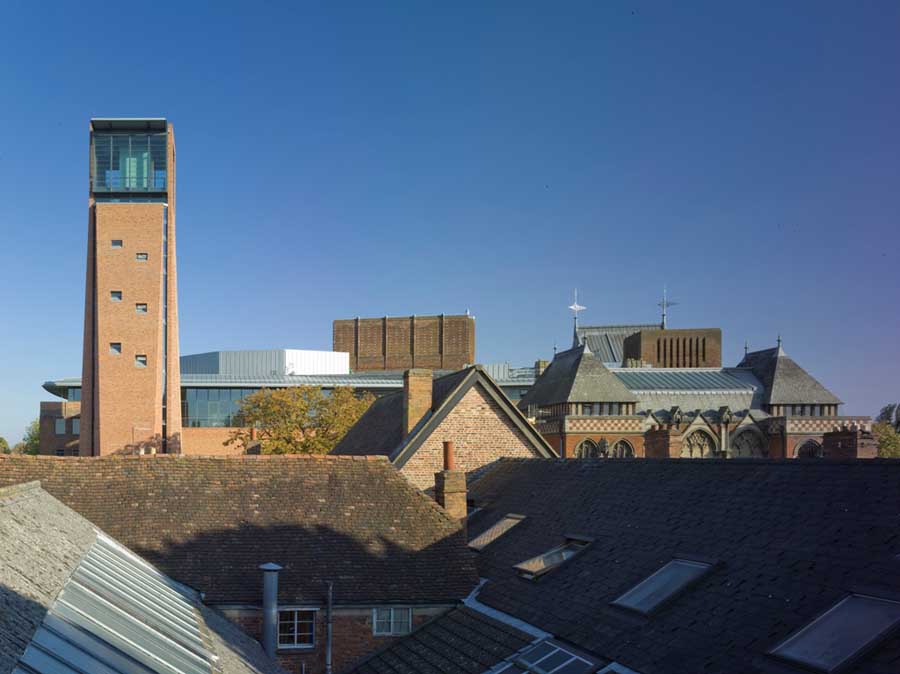
Speed Dating in Stratford-upon-Avon

Information on speed dating events in Stratford-upon-Avon and Warwickshire, aimed at single men and women across Herefordshire and the wider region. The page also serves as an introduction agency listing and points to free join options, photos, chat rooms, interest groups, and private webmail.
Locations covered include Stratford-upon-Avon itself as well as nearby towns such as Coventry, with references extending across Warwickshire.
New Jersey Singles & Professional Matchmaking

An overview of professional matchmaking services in New Jersey, highlighting personalized coaching and over 25 years of dating experience. The article describes how a matchmaker works to understand a client's relationship goals, gathers preferences on age range, height range, smoking status, financial security, and personality traits, then brings two people together with continued feedback.
How to Calibrate Projector Keystone Correction Without Distortion
Keystone correction is useful when a projector faces a screen at an angle, but it is a compromise rather than a cure. The correction electronics warp the raster, stretching some pixels and compressing others so the edges can appear square. That process can soften fine detail, reduce effective brightness and expose interpolation or edge artefacts. For a clean result, use digital trapezoid adjustment only after the mount, lens position and screen have been dealt with as accurately as possible. Learn more about Teknisi.org.
Lens shift is the preferred tool because it repositions the image inside the frame without resampling every pixel. A projector can also be squared to the screen physically, provided the ceiling or shelf mount permits enough movement. Zoom sets image size, while lens shift deals with the optical offset built into many models; treating one as the other is a common source of crooked pictures. Whiteboards, drop-down screens and fixed walls each impose different alignment limits. Learn more about Dating Costs.
A reliable workflow starts with a known test pattern, then checks focus, image size, vertical keystone, horizontal keystone and aspect ratio in that order. Work in small steps and view the result from the normal seat rather than crawling behind the unit. Correcting horizontal geometry before vertical can make one distortion look worse, and stretching a 2.39:1 film to fill a 16:9 screen cannot be repaired by geometry controls. Learn more about How To Fix A Buzzing Sound From Your Subwoofer 480941.
The goal is a rectangular image whose pixels map neatly to the screen, not merely straight outer edges. Straight edges can still contain uneven focus, overscan, a crooked projector or a scaler changing the frame size. Once the image is stable, picture settings can be judged honestly, and the receiver’s sound calibration can be done without visual distractions. This approach suits Australian homes, where a living room, media room and compact flat may all use the same projector at different screen sizes. Learn more about Kak Nastroit Nginx Dlya Uskoreniya Saita Na Wordpress.
Establish a clean signal chain
Start by feeding the projector a direct HDMI signal from the chosen source, even if the final system will include a home theatre receiver. This isolates projector geometry from receiver scaling. Select the source’s native resolution and refresh rate, disable unwanted overscan or “fit to screen” processing, and make sure the receiver is passing the signal rather than converting it to a lower-resolution frame. A laptop, game console and Blu-ray player should each be checked because aspect-ratio handling can differ. Learn more about How To Troubleshoot A Receiver That Has No Video Output 418498.
Australian viewing habits make Foxtel set-top boxes, game consoles and 4K streaming devices common sources. Foxtel’s 4K HDR feeds arrive in a 50 Hz television environment, while consoles may offer 50, 60 or 120 Hz output, so the receiver and projector need matching capabilities. Keep the receiver’s output at the highest common format, but do not force a 4K signal into a 1080p projector; the scaler will add processing that makes test patterns harder to read.
If the receiver has menus but no picture reaches the projector, work through this receiver video troubleshooting sequence before touching keystone settings. Check that the correct HDMI input is selected, the output assignment matches the active input, and both ends of the cable are seated. A receiver can also be in the right input while an upstream device is asleep or stuck on another HDMI. Once the signal appears, confirm its resolution in the projector menu and leave the aspect setting at the option that preserves the original proportions.
Correct geometry before colour
Place a fine grid or resolution chart on the screen and dim the room. Start with the projector square to the screen’s centreline, then use lens shift and zoom to place the image. Check that the focus plane is perpendicular to the screen: if a ceiling mount tilts the unit, the top and bottom may focus differently even when the keystone slider makes the outline look neat. Where the model offers automatic lens geometry, use it only as an initial estimate.
Adjust vertical keystone only enough to make the top and bottom edges parallel. Then correct horizontal keystone so the left and right edges are parallel. Many menus show a numerical percentage, and values near zero are preferable. Corner or point correction can handle residual error at each corner, but excessive values introduce bowing, fuzzy diagonals and uneven brightness. Barrel and pincushion distortion are lens issues and need a different menu, so do not try to hide them with trapezoid correction.
Projector and receiver terminology varies between brands, so the general home theatre reference notes can help when a manual uses terms such as raster, offset or image flip. After each change, have a proper squint from the seats and inspect the grid again, because an apparently straight edge may still be moving. If lens shift and physical placement can remove the error, choose that route; digital keystone should be the last small adjustment, not the first response to a crooked setup.
Preserve resolution and picture quality
Every increment of digital keystone can reduce the number of source pixels displayed. A 4K image may become visibly softer on a 1080p projector, and a bright room makes the loss of lumens more obvious. Compare small text, a crosshatch and the outer edges of a native-resolution test image. A sharp centre with mushy corners is a strong sign that correction has gone too far, even if the rectangle now looks convincing.
Set picture controls only after geometry is fixed. Choose the correct frame or aspect ratio, then adjust brightness, contrast, gamma, colour temperature and sharpness against the intended screen. Turn off frame enhancement or extreme sharpening, since both can make digital warping artefacts obvious. Black-level, iris and dynamic contrast modes can hide washed-out shadows while changing brightness during viewing; fixed settings are easier to judge. A high-gain screen and controlled ambient light will reveal geometry errors that a grey test pattern conceals.
Sound is a separate calibration, and changing the picture should not trigger a fresh receiver measurement. Set channel levels, speaker distances and the subwoofer crossover first, then run the receiver’s room correction, such as Audyssey, DIRAC, YPAO or MCACC. Dolby Atmos and DTS:X object audio need accurate speaker positions and bass management. If the bass is buzzing rather than merely sounding boomy, the subwoofer buzzing guide can help distinguish a loose connection, mains hum and an overdriven amplifier before you alter the crossover.
Plan cables, power and mounting
Australian homes often combine NBN fibre, television coax and older aerial wiring, particularly in established suburbs. NBN fibre may terminate at a wall socket while Foxtel arrives by coax from a satellite dish, and those routes do not necessarily meet in the same place. Plan the projector’s HDMI run before fixing the mount; certified Ultra High Speed cable supports the full bandwidth needed for 4K high-frame-rate sources, while active or fibre HDMI may be sensible for longer distances. Do not confuse NBN fibre with optical HDMI, which needs its own power supply.
Mains power in Australia is 230 V and plugs use the Type I standard, so check the projector’s voltage range and use a suitable surge protector rather than a loose overseas adaptor. Compare GST-inclusive quotes and avoid buying long premium cables to compensate for poor signal routing. In a brick-veneer terrace, Sydney apartment or coastal Queensland house, cable paths and ventilation can differ sharply. A strata or landlord check may also be required before fixing equipment into a communal wall or ceiling.
Run fixed AV cabling away from mains where practical, label both ends, and leave a service loop at the projector and dish. A qualified antenna technician can handle roof-mounted satellite alignment and grounding, while ceiling or wall work around Australian mains circuits belongs with a licensed electrician. If a cinema-room project competes with other household spending, the site's dating cost comparison can prompt a broader budget review; it should not replace firm quotes for the mount, screen, cables and installation labour.
Validate and save the final image
Test with several native-resolution patterns, including a full-screen grid, fine text and a circle with straight sides. Cycle through every source and aspect ratio used in the room, because a saved profile for sports may not suit a widescreen film. Look for a one-pixel crawl along the outer boundary, uneven focus and brightness changes between the centre and corners. Adjust the image shift, keystone values and lens memory while seated, then take a reference photo so the setup can be restored after a firmware update or lens change.
When test material is hosted on a WordPress page, the site's WordPress speed guidance can prevent slow loading from being mistaken for projector stutter. A frozen browser frame is not the same as a dropped HDMI frame. Check the receiver’s status display or menu for resolution and frame rate, disconnect and reconnect the source, and rule out a receiver scaler before changing the projector menu. Persistent frame changes at one input usually indicate a source, handshake or processing issue, while identical artefacts on every input point towards the projector or screen.
Environmental conditions deserve a final check. Brisbane heat can raise the temperature around a projector’s vents, while Perth dust can reach filters faster than expected; clean according to the manual and keep airflow clear. Salt-laden air near some coastal homes also encourages corrosion on unprotected connectors. After servicing, repeat the grid test in the room’s normal lighting and confirm that the image remains rectangular, the focus is even and the receiver has the correct audio delay. A stable, correctly mapped image is the practical measure of a successful calibration.
Legitimate Cougar Dating Sites

A guide to finding legitimate cougar dating sites, avoiding scams, and getting good results on platforms such as CougarDate.com, Cougar Life, and Adult FriendFinder. The article lists seven cougar dating sites, examines whether CougarDate.com is a scam, and includes a separate list of free dating and hookup sites.
Olympic Ice Skating Pairs and Romances
An article discussing prominent figure skating romances, marriages, and couples among Olympic ice skating pairs. It profiles eight Olympic ice skating pairs who are couples in real life and explains the required elements of pair skating, including lifts, twist lifts, throw jumps, jumps, and spins.
Expat Dating in Baku

A guide for expatriates looking to date in Baku, Azerbaijan. Topics include social life for expats, safety and comfort in areas like Downtown Baku, the visa process, getting around by mass transit, and monthly events for expatriates. The piece also references Baku hotels and places to stay.
Reformed Matchmaking and Jewish Dating
Content related to Reformed matchmaking, JRetroMatch, and Jewish matchmaking services within the context of religious observance. The article discusses Reform Judaism, the spectrum of positions on halakhic observance, and looks at how matchmaking functions within observant communities.
Age Gap Dating Advice

A discussion on age preferences in dating, referencing research guidelines and personal experiences with age-gap relationships. The piece references Psychology Today and examines whether one well-known age guideline may not work for everyone, along with personal anecdotes from readers.