Steve Platt collects articles and notes on online dating services, professional matchmaking, speed dating events, and relationship advice for a range of locations and demographics.
"If you want a more personal approach to finding matches than online dating provides, consider enlisting the help of a professional matchmaker."
The site covers speed dating events in Stratford-upon-Avon and Warwickshire, New Jersey singles and professional matchmaking with over 25 years of dating experience, the costs of online dating services including eharmony and Badoo, a guide to legitimate cougar dating sites and avoiding scams, an article on Olympic ice skating pairs and figure skating romances, and a guide for expat dating in Baku, Azerbaijan.
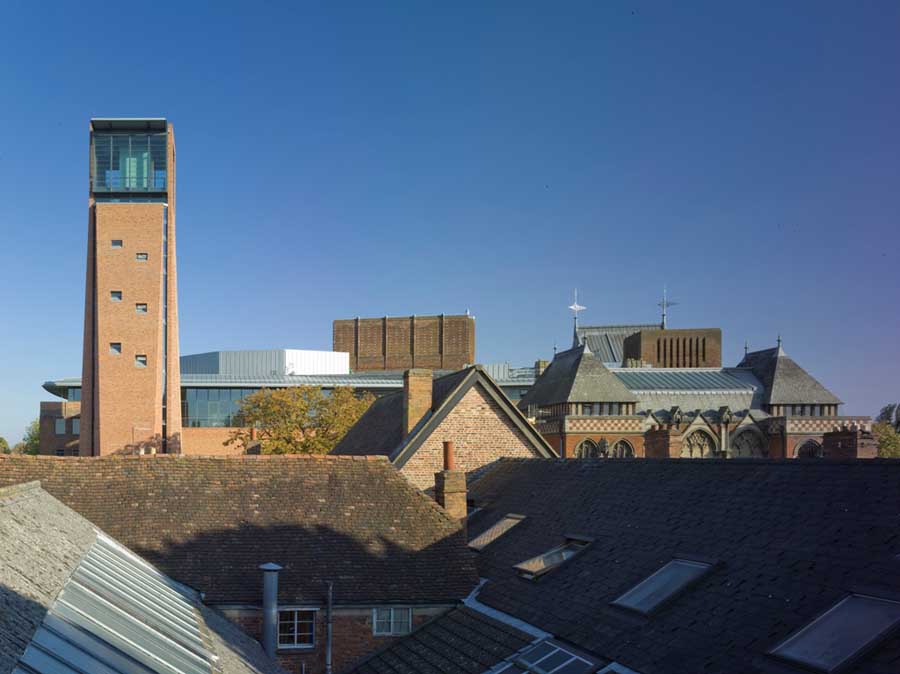
Speed Dating in Stratford-upon-Avon
Information on speed dating events in Stratford-upon-Avon and Warwickshire, aimed at single men and women across Herefordshire and the wider region. The page also serves as an introduction agency listing and points to free join options, photos, chat rooms, interest groups, and private webmail.
Locations covered include Stratford-upon-Avon itself as well as nearby towns such as Coventry, with references extending across Warwickshire.
New Jersey Singles & Professional Matchmaking

An overview of professional matchmaking services in New Jersey, highlighting personalized coaching and over 25 years of dating experience. The article describes how a matchmaker works to understand a client's relationship goals, gathers preferences on age range, height range, smoking status, financial security, and personality traits, then brings two people together with continued feedback.
How to Calibrate Projector Colour Settings for Accurate Pictures
Accurate projector colour settings depend on the room, screen, source and display mode as much as the projector itself. A picture that looks vivid in a darkened Sydney lounge can appear washed out in a bright Brisbane family room, while a projector in a dedicated Melbourne cinema may need deeper blacks and a lower white point. The aim is repeatable colour that looks natural across the content you actually watch.
Calibration should begin with a neutral baseline and proceed in a controlled order. Test the complete signal path, including a satellite receiver, streaming device or home theatre receiver, before making fine adjustments. Keep the lamp mode, picture mode and viewing conditions consistent, because changing any of these alters the result.
Prepare the room and signal path
Control ambient light before touching the picture controls. Block direct sunlight with curtains or blinds, turn off room lights and close reflective doors. Sydney, Melbourne and Brisbane homes can experience strong daytime light, particularly during summer, while even a small amount of reflected daylight can shift the apparent black level and dilute colour accuracy.
Australia’s electrical standards also deserve a quick check. Projectors and home theatre receivers sold locally normally suit 230–240 volts at 50 Hz and commonly use Type I plugs. Check the label on imported equipment: a 100–120-volt projector needs a suitable transformer, while a multi-voltage model may still require an Australian plug. This is also a good time to secure power and HDMI cables so they cannot be disconnected during testing.
Connect the source directly to the projector for the initial baseline if practical. Then repeat the measurements through the home theatre receiver, because video conversion, scaling and processing can change the final image. Disable receiver display menus and use pass-through mode for the picture. While checking matching speaker power for the speakers connected to the receiver, avoid changing cables or amplifier settings, as an unexpected reboot can interrupt a calibration pass.
Establish a neutral picture baseline
Reset the projector’s picture controls to factory defaults, then select a neutral, standard or cinema mode intended for SDR content. A separate cinema preset may apply excessive contrast or a strong blue cast. Choose a fixed lamp mode as well, since eco or high-brightness modes alter colour temperature and light output.
Use the projector maker’s test patterns or a reputable grayscale and colour test suite. Display them at the source’s native resolution without browser scaling, cropping or subtitles. A pattern from a satellite receiver may be compressed or converted, so patterns supplied by a disc player, laptop or projector are better for judging fine colour differences.
Correct the image geometry before evaluating colour. Set the image size and lens position manually, and leave keystone, overscan and extreme zoom at neutral values. Disable dynamic contrast, colour enhancement, noise reduction and excessive sharpness. These features may make the picture punchier, but they also change the data being measured.
Tune gamma, brightness, and contrast
Start with a grayscale ramp containing black, shadow, midtone, highlight and white bars. A gamma setting around 2.2 generally suits a room with some ambient light, while 2.4 is often better in a fully dark cinema. Projector gamma controls vary between brands, so judge the gradient rather than assuming the printed number is exact.
Adjust brightness and black level together. Brightness should be low enough that black bars and dark scenes remain black, but not so low that shadow detail disappears. Contrast should preserve separation between the darkest and brightest parts of the image without clipping highlights. Projector contrast scales are not standardised, so avoid chasing a particular percentage or comparing it directly with a television.
Watch the result in familiar content, not only test patterns. Dark coats, foliage, skin and bright windows quickly reveal crushed blacks or blown highlights. Make small changes and allow several minutes for the picture to settle. A setting that looks correct on a synthetic ramp can still make natural skin tones look unnaturally pale or orange.
Balance white point and colour primaries
For SDR video, the standard target is D65, commonly presented as 6500 K. Select that preset if the projector offers one. If white balance is adjustable, begin with the factory default and use a grayscale pattern to remove any obvious green, magenta or blue cast. Neutralise the darkest areas first, then reassess the midtones and highlights.
Most projectors provide separate RGB gain and offset controls, sometimes labelled high and low brightness. Gain changes usually affect highlights, while offset changes the lower part of the range. Do not make large corrections to both at once. A warm room may benefit from a slightly cooler target, but excessive compensation can make bright content look harsh.
Tint and saturation require restraint. Tint controls should usually sit near zero on a neutral preset, while saturation should be left at the manufacturer’s standard or Rec.709 value. Colour bars can exaggerate differences, so check skin, food, sky and natural fabrics as well. Colour filters are rarely necessary; they reduce brightness and can introduce their own cast. Persistent colour differences across the image may justify professional calibration or projector panel servicing.
Account for Australian viewing sources
Australian streaming services such as Foxtel, Fetch and ABC iview, together with Blu-ray, broadcast television and games, may all deliver slightly different colour characteristics. Compression can shift fine shades, while a set-top box may convert the signal before it reaches the projector. Calibrate in SDR first, then check the important sources separately and avoid correcting every source with a different set of values.
Australia’s historical PAL standard and current 50 Hz broadcast system can also cause apparently poor colour or motion. Modern digital video is generally Rec.709, while older PAL material may look softer or more saturated. Defective combing, unstable hues or rainbow artefacts are usually decoding or source problems rather than incorrect projector colour settings. A native 24 or 25 frame-per-second picture is preferable for cinema content, while 100 Hz sports modes found on some Australian televisions or projectors can introduce unwanted motion effects.
HDR needs its own evaluation because it uses a different transfer system and may be tone-mapped by the projector or receiver. Switch to the projector’s dedicated HDR or film mode, check that HDR signalling is enabled and judge it with familiar highlights. Do not compensate for weak HDR peak brightness by making broad white-balance changes. If the projector lacks reliable HDR calibration controls, leave the picture in its manufacturer HDR preset rather than destabilising the carefully set SDR mode.
Verify results and maintain the picture
Run the complete test suite after the projector has warmed up for at least 20 to 30 minutes. Check a ramp with labelled brightness levels, colour bars, skin-tone references and sharp text. Repeat the same measurements through the home theatre receiver and satellite box used in normal viewing. If colour is correct on one source but wrong on another, investigate that source rather than altering the projector again.
Keep the system stable while checking the result. Do not rewire or retune the amplifier between measurements; if speaker impedance is under discussion, series versus parallel wiring explains how connection changes affect a multi-speaker load. For isolated faults, power-cycle the source, receiver and projector in sequence, try another HDMI input and temporarily bypass the receiver. A universal cast usually indicates the projector, room or selected preset, while a source-specific fault points toward the decoder or cable.
Dust, ageing lamps and changing filter conditions can gradually alter the picture. Clean the air intake and filter as directed, monitor lamp hours and record the working picture settings. Recalibrate after a lamp replacement or major room change. Professional calibration with a colorimeter and test disc remains the best option for a dedicated theatre, a large screen or a projector showing visible panel-to-panel variation.
Before calibration
- Warm the projector and keep its lamp mode unchanged.
- Reduce ambient light and eliminate reflections from windows.
- Use an SDR Rec.709 source at the native output resolution.
- Disable dynamic contrast, noise reduction and colour enhancement.
- Save the factory or neutral picture values for comparison.
After calibration
- Recheck grayscale, skin tones and near-black detail.
- Test every regularly used source through the receiver.
- Confirm that subtitles and receiver menus are absent.
- Compare daytime and evening viewing conditions.
- Record the settings and schedule periodic lamp and filter checks.
| Control | Recommended starting point | What to verify |
|---|---|---|
| Picture mode | Neutral, standard or cinema SDR mode | No automatic colour or contrast adjustment |
| Gamma | 2.2 for a brighter room; 2.4 for a dark theatre | Smooth shadow-to-highlight gradation |
| Colour temperature | D65 or 6500 K for SDR | Neutral grayscale without a colour cast |
| RGB gain and offset | Factory values, adjusted only as needed | Balanced shadows, midtones and highlights |
| Tint and saturation | Neutral or Rec.709 defaults | Natural skin and believable primary colours |
| Dynamic enhancement | Off | Consistent brightness and stable colour |
Legitimate Cougar Dating Sites
A guide to finding legitimate cougar dating sites, avoiding scams, and getting good results on platforms such as CougarDate.com, Cougar Life, and Adult FriendFinder. The article lists seven cougar dating sites, examines whether CougarDate.com is a scam, and includes a separate list of free dating and hookup sites.
Olympic Ice Skating Pairs and Romances
An article discussing prominent figure skating romances, marriages, and couples among Olympic ice skating pairs. It profiles eight Olympic ice skating pairs who are couples in real life and explains the required elements of pair skating, including lifts, twist lifts, throw jumps, jumps, and spins.
Expat Dating in Baku

A guide for expatriates looking to date in Baku, Azerbaijan. Topics include social life for expats, safety and comfort in areas like Downtown Baku, the visa process, getting around by mass transit, and monthly events for expatriates. The piece also references Baku hotels and places to stay.
Reformed Matchmaking and Jewish Dating

Content related to Reformed matchmaking, JRetroMatch, and Jewish matchmaking services within the context of religious observance. The article discusses Reform Judaism, the spectrum of positions on halakhic observance, and looks at how matchmaking functions within observant communities.
Age Gap Dating Advice

A discussion on age preferences in dating, referencing research guidelines and personal experiences with age-gap relationships. The piece references Psychology Today and examines whether one well-known age guideline may not work for everyone, along with personal anecdotes from readers.